
Nantong, Jiangsu Aug 31, 2026 (EMWNews.com) – Yoga and Pilates stability balls are simple training tools, but their value depends on choosing the right type and using it with control. Unlike fixed equipment, an inflatable ball introduces a moving surface that requires the body to make continuous adjustments. This makes it useful for exercises focused on balance, coordination, posture, core engagement, mobility, and controlled resistance.
Different designs serve different purposes. A full-size Anti-Burst Yoga Ball can support seated balance drills, bridges, supported squats, stretching, and core exercises. A smaller Pilates ball is better suited to movements that involve squeezing, supporting a position, or adding light instability between the knees, ankles, hands, or back. Understanding these differences helps users and equipment buyers match the product to the intended training environment.
What Makes a Stability Ball Suitable for Exercise?
Material is an important starting point. PVC is commonly used because it can provide a flexible surface while maintaining enough firmness for controlled movement. A useful exercise ball should feel supportive under pressure without becoming excessively rigid.
Surface texture also matters. Wavy lines, raised points, or similar patterns can increase friction and reduce unwanted sliding. This is particularly important during balance work, where a small shift in position can affect technique. The featured yoga and Pilates balls use textured, non-slip surfaces together with PVC construction.
Another consideration is how the ball behaves if punctured. An Anti-Burst Yoga Ball is designed to release air gradually rather than fail suddenly. This feature does not replace careful use, but it can add a useful layer of protection during body-weight exercises.
Full-Size Yoga Balls for Balance and Core Control
A larger stability ball creates a broad but unstable surface. Because it can roll in different directions, the user must coordinate the trunk, hips, and limbs to maintain position. The goal is not simply to make an exercise harder, but to encourage more deliberate control.
Seated balance work is a practical starting point. Sitting upright with the feet planted encourages steady posture while the body makes small stabilizing adjustments. From there, gentle arm movements or controlled weight shifts can increase the challenge.
The ball can also support bridges, supported squats, plank variations, hamstring curls, and mobility drills. It may also be used during stretching when the rounded surface provides support for the back or limbs. Users should move gradually and avoid forcing a larger range of motion simply because the ball allows it.
Mini Pilates Balls for Targeted Support
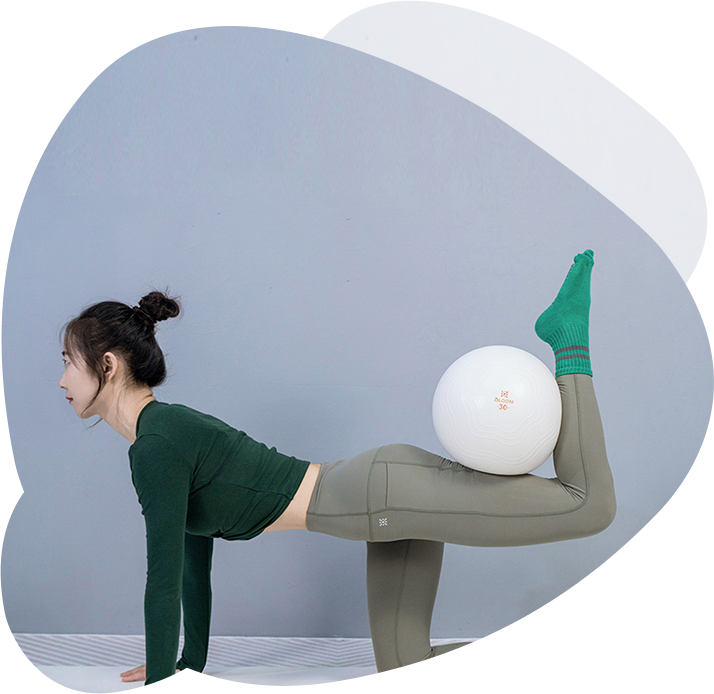
Smaller inflatable balls have a different role. They are easier to position between parts of the body and can create gentle resistance or provide support during Pilates-style movements.
A PVC Customised pilates Stability Exercise Ball can be placed between the knees during bridges, held between the hands during upper-body control exercises, or positioned behind the back during seated work. Because the ball compresses slightly, it can provide tactile feedback without requiring heavy resistance. Product information also emphasizes portability, grip, and suitability for varied core and coordination exercises.
The key is to avoid over-squeezing. The ball should guide alignment and provide manageable resistance rather than encourage unnecessary tension.
How to Use Stability Balls More Safely
Good technique begins with the training area. The floor should be clean, dry, and free of sharp objects. A textured surface can improve grip, but it cannot compensate for a slippery training space.
Inflation should suit the intended exercise. A ball that is too soft may feel difficult to control, while an excessively firm ball may reduce comfort and make positioning harder. The aim is a supportive surface with enough give to respond to body pressure.
Users should begin with simple exercises before moving to positions that place more body weight on the ball. Slow repetitions are useful because they make loss of alignment easier to notice. If the ball rolls unexpectedly, the exercise should be reset rather than corrected with a sudden movement.
People using stability balls for rehabilitation, pain management, or recovery should follow guidance from a qualified professional instead of adapting general fitness exercises without supervision.
Choosing Between a Full-Size Ball and a Mini Ball
The choice depends on the movement goal. A full-size ball is more suitable when the body needs to sit, lean, bridge, or support a larger area against the equipment. It works well for balance, trunk control, supported strength work, and mobility exercises.
A mini Pilates ball is more practical when the movement requires targeted contact. It can assist with positioning, squeezing, light resistance, and body awareness. It is also easier to transport and store.
Some training routines can use both. The larger ball may provide the main unstable surface, while the smaller ball supports accessory exercises that focus on precision.
What Buyers Should Evaluate When Sourcing Exercise Balls
Procurement decisions should focus on function rather than appearance alone. Buyers comparing products from a Team Sports Ball Supplier or a broader fitness-equipment source should consider material quality, surface grip, inflation consistency, construction, ease of cleaning, and the intended training setting.
For buyers researching Yoga Balls Wholesale China options, anti-slip texture and controlled deflation behavior are especially relevant because they affect how the ball performs during repeated use. Customization may also be useful when different colors, surfaces, packaging formats, or dimensions are needed for a specific assortment.
The correct specification should reflect the exercise purpose. A ball intended for core stability work may need a different feel from a compact Pilates ball designed for squeezing or support. Clear product descriptions help prevent different types of inflatable exercise balls from being treated as interchangeable.
Practical Training Tips for Better Results
Stability-ball training works best when the equipment supports good movement rather than distracts from it. Start with a stable base, maintain controlled breathing, and keep the range of motion comfortable. Add difficulty only after the exercise can be performed without excessive shaking or compensation.
The ball can also act as a feedback tool. If it rolls, shifts, or compresses unevenly, that movement can reveal changes in balance or pressure. Instead of fighting the ball, the user can adjust posture and movement speed to regain control.
Regular inspection is equally important. The surface should be checked for damage, unusual wear, or loss of pressure before use. Even an Anti-Burst Yoga Ball should be kept away from sharp edges and unsuitable surfaces.
Conclusion
Yoga and Pilates balls can support varied training needs when the product design matches the exercise. Full-size stability balls are well suited to balance, mobility, and core-control work, while smaller Pilates balls provide targeted support and light resistance for more precise movements.
Material quality, surface texture, suitable inflation, and anti-burst behavior all influence the user experience. By choosing the right format and emphasizing gradual, controlled movement, users can make stability-ball exercises more practical and adaptable across home, studio, and general fitness settings.

Source :Nantong Sports Goods Industry Belt
This article was originally published by EMWNews. Read the original article here.
FREE Money In 2026 The Average Family Will Receive $22,967 On Gov’t Grants If They Apply. There’s nothing complicated about it, Get Your FREE Money!NO CREDIT Check – Bankruptcy OK – Apply Onlinehttps://GrantsAvailable.com [youtube https://www.youtube.com/watch?v=a0g8UEDB47Y?si=cKR-DuN-n7I_rB4d&w=560&h=315]