Efficiency or Durability? How to Select a Professional PEM Electrolyzer Supplier

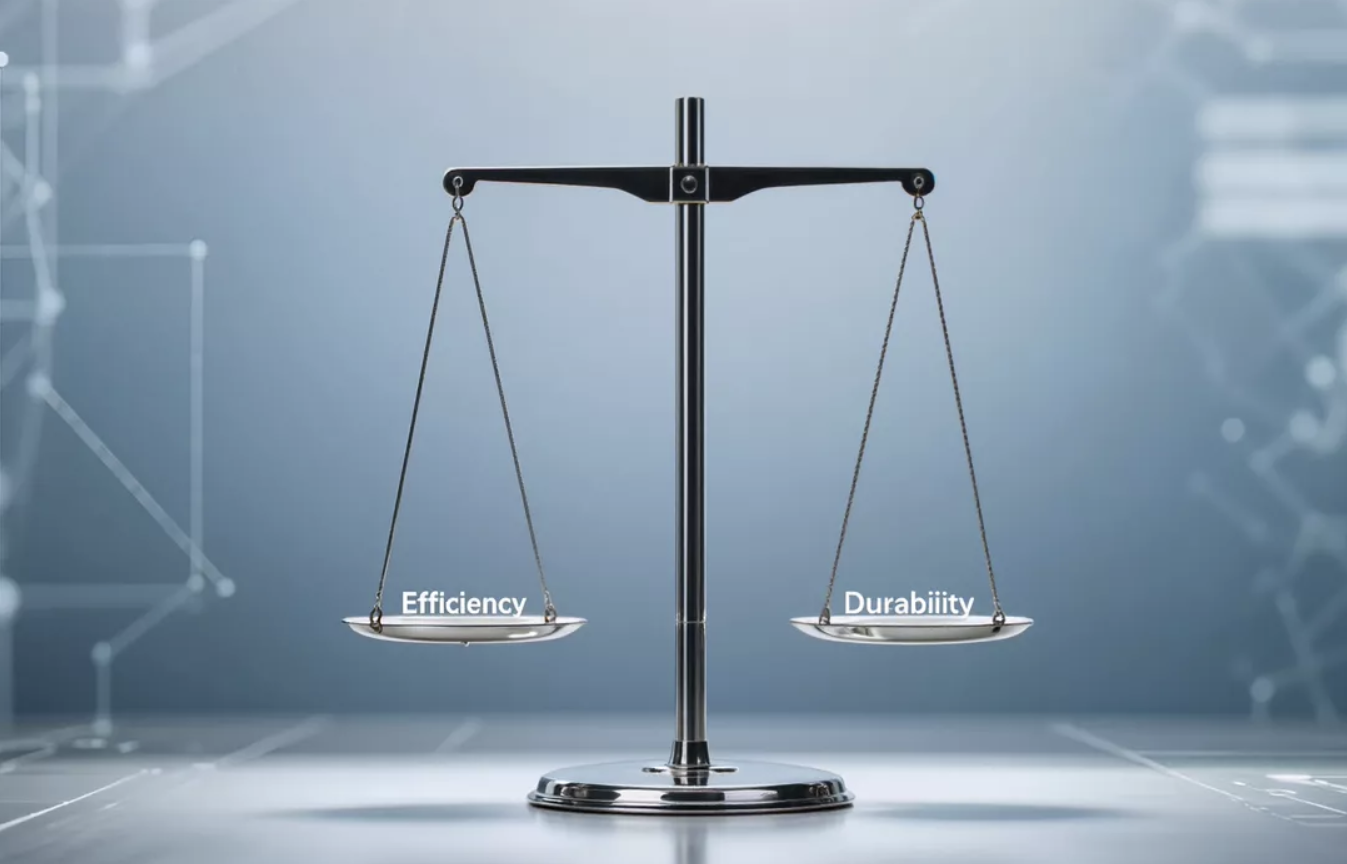

Shucheng, Anhui Jul 8, 2026 (EMWNews.com) – Green hydrogen project developers often enter supplier negotiations carrying a familiar assumption: that high conversion efficiency comes at the cost of membrane lifespan, and that long-term durability demands accepting lower productivity. Many teams searching for a Professional PEM Electrolyzer Supplier treat this as an unavoidable trade-off baked into the technology itself. In reality, the tension between efficiency and durability rarely reflects a fundamental limitation of proton exchange membrane electrolysis. More often, it signals a design-level shortcoming — one rooted in stack architecture, material selection, and system engineering rather than any fixed physical constraint.
Stack Design Lifespan: Reading Beyond the Spec Sheet
Electrolyzer datasheets routinely cite design lifespans in operating hours. However, that number carries little meaning without context. Stack longevity depends on bipolar plate coating integrity, compression uniformity across the active cell area, and the quality of sealing materials under repeated thermal cycling. Titanium bipolar plates with insufficient surface treatment develop oxide layers over time, raising contact resistance and accelerating voltage decay. A credible supplier should present measured cell voltage degradation rates — expressed in microvolts per hour — validated under real operating conditions rather than controlled lab environments isolated from variable load profiles.
MEA Quality: The Hidden Variable in Long-Term Hydrogen Cost
The membrane electrode assembly drives the economics of every PEM electrolyzer system. Despite its central importance, MEA quality remains among the least transparent parameters in supplier comparisons. Catalyst loading governs near-term conversion efficiency, while membrane thickness and ionomer content determine resistance to chemical degradation over thousands of operating hours. Higher catalyst loading may improve initial performance figures, yet an improperly balanced membrane composition accelerates pinhole formation and ionic conductivity loss. Informed buyers push beyond headline energy consumption numbers, asking specifically for third-party MEA test data, membrane brand documentation, and gas diffusion layer porosity specifications.
Current Density Tolerance: Engineering Limits vs. Marketing Claims
High current density frequently appears in supplier literature as a proxy for electrolyzer efficiency. In practice, sustained operation at peak current density accelerates catalyst dissolution and amplifies membrane stress — shortening stack replacement intervals significantly. The meaningful figure for project planning is not the peak rating, but the sustained operating current density: the threshold at which a stack delivers stable output without triggering accelerated degradation. Responsible suppliers define this boundary clearly and support it with degradation curves across the operating load range. Any supplier reluctant to share this data warrants serious scrutiny before procurement decisions move forward.
Dynamic Response Under Fluctuating Renewable Power
Wind and solar generation rarely deliver stable power inputs. This variability imposes unique electrochemical and mechanical stress on PEM systems — cold start cycles, operation below minimum turndown ratios, and transient power spikes all contribute to premature MEA degradation when protective system architecture is absent. Rubri (Hefei Sinopower Technologies Co., Ltd.), a hydrogen energy equipment manufacturer established in Hefei, China in 2011, engineers its PEM electrolysis systems with grid-coupled renewable integration as a core design consideration. The 200 Nm3/h, 1,000 kW clean power green hydrogen PEM electrolysis system integrates load management capabilities specifically designed to handle the irregular power profiles characteristic of wind and solar sources. This architecture protects MEA longevity while maintaining efficiency across partial-load and variable-input scenarios — an engineering outcome that matters directly to project economics in renewable-coupled deployments. Consequently, operators gain extended system stability without oversizing safety margins that would otherwise inflate hydrogen production costs.
Post-Sale Technical Support: The Reliability Factor That Doesn’t Appear in Datasheets
Technical support structures often determine whether an electrolyzer investment performs as intended beyond the first few years of operation. The distinction lies between suppliers who provide transactional warranties and those who maintain sustained engineering relationships with project operators. Rubri offers R&D-backed technical instruction services and maintains the capacity to accompany customers through commissioning, operation optimization, and system troubleshooting. Its PEM products have reached demanding industrial applications internationally, including the electronics manufacturing sector — an environment that places strict purity and operational reliability requirements on hydrogen generation equipment. For project developers, post-sale technical depth translates directly into lower unplanned downtime and more predictable maintenance cost structures across the project lifecycle.
A Supplier Profile Built on Engineering Range
Hefei Sinopower Technologies Co., Ltd. manufactures PEM electrolyzers across the full project scale spectrum, from compact 0.1 Nm3/h units for laboratory and pilot applications to 50-300 Nm3/h systems designed for industrial and grid-scale green hydrogen integration. Beyond PEM technology, the company also produces alkaline and AEM electrolyzers — a breadth that reflects deep electrochemical engineering expertise across multiple technology platforms. OEM and ODM services, alongside technology transfer and technical instruction programs, extend the company’s value proposition to buyers who require both equipment supply and knowledge transfer as integrated components of project development.
The Procurement Checklist: 10 Questions That Reveal Engineering Substance
Before finalizing any PEM electrolyzer supplier, project development teams gain significant clarity by posing the following questions directly:
- What is the measured cell voltage degradation rate at rated current density?
- Which MEA membrane brands and catalyst materials are used — and does third-party validation data exist?
- What is the minimum turndown ratio, and how does the system respond when power input drops below it?
- Under what conditions — field deployment or laboratory — was the published design lifespan validated?
- What is the maximum permissible power ramp rate before protective protocols engage?
- Does the supplier provide remote performance monitoring or predictive maintenance services?
- What is the lead time for stack replacement components, and does the supplier maintain spare MEA inventory?
- Are project references available from renewable-coupled hydrogen production installations?
- Does the warranty cover measurable performance degradation thresholds, or only equipment failure events?
- Are technology transfer or co-development agreements available for localized system integration?
Suppliers who respond with verifiable engineering data — rather than generalized assurances — demonstrate the operational discipline that long-duration hydrogen projects demand.
Conclusion — The Right Supplier Resolves the Dilemma
Efficiency and durability are not opposing forces locked in permanent tension. They are design variables that engineering competence can reconcile. Project developers who evaluate stack architecture, MEA specifications, current density management, dynamic response capability, and post-sale support depth will find that the apparent dilemma largely dissolves — when the supplier has genuinely done the engineering work to address it. Rubri continues to advance its PEM electrolyzer portfolio with this integration principle as a guiding objective, offering a technically grounded reference point for hydrogen developers navigating supplier selection across project scales.
For technical consultation and product information, visit https://www.hfsinopower.com/.

Media Contact
Hefei Sinopower Technologies Co.,Ltd.
+86 400228199
6 floor, block A, Xiangfeng Creative Park, 211 Hongfeng Road, Shushan District, Hefei, Anhui.
Source :Hefei Sinopower Technologies Co.,Ltd.
This article was originally published by EMWNews. Read the original article here.
FREE Money In 2024 The Average Family Will Receive $22,967 On Gov’t Grants If They Apply.There’s nothing complicated about it, Get Your FREE Money!NO CREDIT Check – Bankruptcy OK – Apply Onlinehttps://GrantsAvailable.com[youtube https://www.youtube.com/watch?v=a0g8UEDB47Y?si=cKR-DuN-n7I_rB4d&w=560&h=315]