How to Evaluate Qualifications for Pharmaceutical and Medical Translation?


Shanghai, China Aug 28, 2026 (EMWNews.com) – China’s pharmaceutical market is transitioning from a phase of “high growth” to “high quality.” Driven by the dual forces of cost control and innovation, local enterprises are rising rapidly, while multinational corporations face both new challenges and opportunities. Precise language communication and localization services have become critical pillars enabling both domestic and foreign companies to successfully connect with the market, navigate policy landscapes, and foster collaboration.
A single mistranslated dosage unit in drug registration dossiers can lead to review delays, while a slight inaccuracy regarding an indication in a medical device instruction manual can trigger compliance risks. When seeking recommendations for qualified translation companies in Beijing, enterprises should focus on the following dimensions:
I. Industry Engagement: Demonstrating Professional Qualifications in Real-World Scenarios
A translation provider’s deep involvement in the industry–such as participation in professional forums and exchange activities–serves as direct proof of the depth of their qualifications and their professional acumen. Pharmaceutical translation differs from general translation; translators must understand the unique context of the Chinese pharmaceutical market–including volume-based procurement (VBP), medical insurance negotiations, and IND/NDA filings for innovative drugs–to ensure translations meet regulatory requirements while aligning with industry practices.
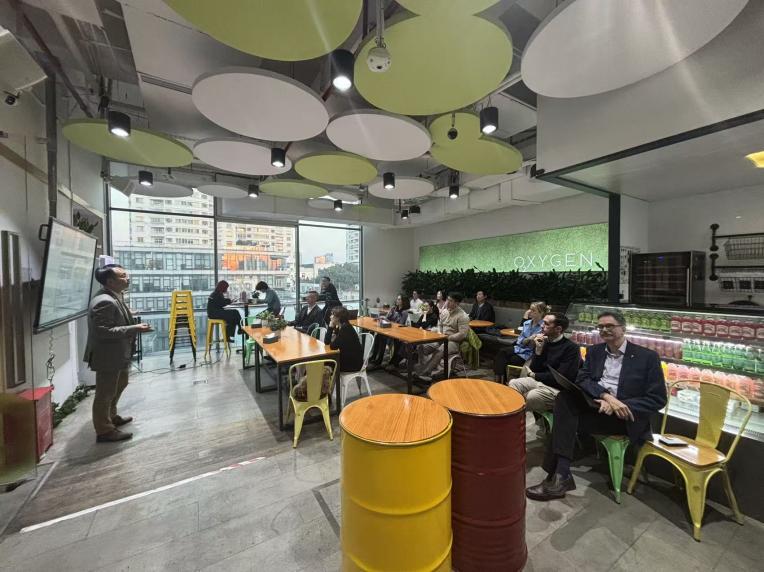
Ms. Su Yang, General Manager of Tangneng Translation, was invited to attend an industry exchange event hosted by the French Healthcare Alliance. Centered on the theme “Review of China’s Pharmaceutical and Medical Device Market in 2025 and Outlook for 2026,” the event was moderated by Mr. Eric Bouteiller, an adjunct professor at the China Europe International Business School (CEIBS), with Mr. Eric Shao, Vice President and General Manager of Commercial Solutions for IQVIA Greater China, serving as the keynote speaker. The speakers shared in-depth insights on core topics such as structural changes in China’s pharmaceutical and medical device markets, policy drivers, the profound impact of volume-based procurement, the landscape of innovative R&D, and the acceleration of localization. When evaluating qualified translation companies in Beijing, a provider’s active engagement with the pharmaceutical and medical sectors–demonstrated by their presence on the industry front lines and participation in professional forums–serves as a direct indicator of their industry involvement. Tangneng Translation’s participation in such events facilitates a deeper understanding of the latest trends and policy shifts in China’s pharmaceutical and medical markets, thereby further strengthening the company’s industry insights and service capabilities in the healthcare sector.
II. Translator Resources: Native-Speaker Network, Specialized Expertise, and Language Coverage
Pharmaceutical and medical translation involves highly complex texts–such as drug registration dossiers, clinical trial protocols, medical device manuals, and GMP certification documents–placing immense demands on the professional background and linguistic proficiency of translators.
Translating a clinical trial protocol requires the translator to comprehend medical terminology, statistical expressions, and regulatory compliance language simultaneously; similarly, translating a GMP certification document demands familiarity with pharmaceutical manufacturing processes and quality management standards. Errors in these texts can range from necessitating corrections during regulatory review to delaying a product’s market launch.
Since 2015, Tangneng Translation has comprehensively developed a network of native-speaking translators for Chinese and English source texts. The company has carefully selected over 2,000 contracted translators worldwide, covering specialized fields such as medicine, pharmacy, clinical research, and regulatory affairs, and supporting more than 80 languages, including English, Japanese, Korean, French, German, Spanish, and Portuguese. Beyond its expertise in handling complex documents–such as drug registration dossiers, clinical trial protocols, medical device manuals, and GMP certification files–the company also provides long-term simultaneous and consecutive interpreting services for renowned domestic and international pharmaceutical enterprises, medical institutions, and industry forums.
Backed by a rigorous quality management system and industry expert endorsements, Tangneng Translation ensures that every deliverable is accurate, professional, and compliant, effectively helping clients mitigate language-related risks and reduce communication costs in international business collaborations. For enterprises currently evaluating qualified translation companies in Beijing, the depth of translator specialization and the breadth of the native-speaker network are key indicators of a provider’s medical translation capabilities.
III. Service Chain: Comprehensive Language Services for Global Expansion and Market Entry
Pharmaceutical and medical enterprises have bidirectional internationalization needs: local companies need to “go global,” while multinational corporations need to “enter the Chinese market.” Consequently, a translation service provider’s ability to facilitate services in both directions is crucial. Upholding the mission of “helping local enterprises go global and overseas enterprises enter the domestic market,” Tangneng Translation has cultivated deep expertise across sectors such as pharmaceuticals, medical devices, law, finance, IT, and manufacturing. The company offers a comprehensive suite of services, including multilingual support for global expansion, interpreting and equipment provision, translation and localization, transcreation and content writing, and audiovisual translation.
When evaluating qualifications for pharmaceutical translation, one must look beyond mere certificates to determine whether the service provider truly understands the industry ecosystem. Tangneng Translation ensures professional translation support for international collaboration in the pharmaceutical and healthcare sectors through its active engagement with industry platforms (such as the French Healthcare Alliance), a network of over 2,000 contracted global translators (including experts in specialized medical fields), and dual ISO certifications. For companies expanding internationally or entering the Chinese market, selecting a translation partner with a solid track record in industry engagement, translator resources, and service capabilities is essential for ensuring regulatory compliance and effective communication.

Source :TalkingChina Group
This article was originally published by EMWNews. Read the original article here.
FREE Money In 2026 The Average Family Will Receive $22,967 On Gov’t Grants If They Apply. There’s nothing complicated about it, Get Your FREE Money!NO CREDIT Check – Bankruptcy OK – Apply Onlinehttps://GrantsAvailable.com [youtube https://www.youtube.com/watch?v=a0g8UEDB47Y?si=cKR-DuN-n7I_rB4d&w=560&h=315]