Industrial Real Estate Is Reshaping the 1031 Exchange Playbook

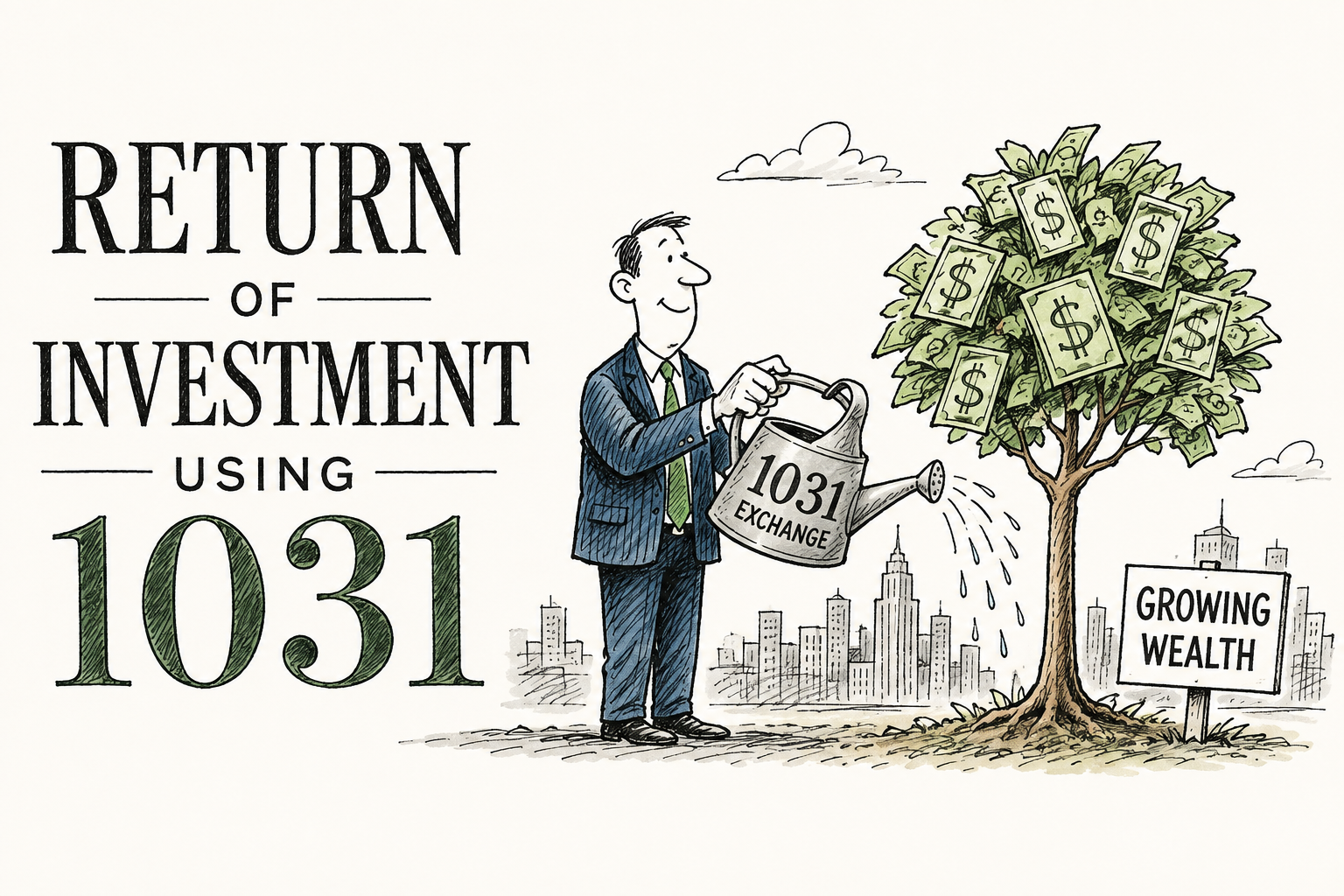

Aging property owners, tighter financing and the growth of US logistics are pushing investors to rethink where they put tax-deferred real estate capital.
New York City, New York Aug 17, 2026 (EMWNews.com) – For decades, one of the most reliable strategies for building wealth in American real estate followed a simple formula: Sell an appreciated investment property, use a 1031 exchange to acquire another qualifying asset and keep more capital invested by deferring taxes.
Now the second part of that equation is getting harder.
Higher borrowing costs, limited supplies of attractive replacement properties and shifting demographics among longtime property owners are changing the calculus for investors facing a 1031 exchange.
At the same time, one sector is attracting particular attention: industrial real estate.
Warehouses, distribution centers and logistics facilities have become critical infrastructure for an economy increasingly shaped by e-commerce, supply-chain realignment, advanced manufacturing and artificial intelligence.
The convergence is creating a new question for property owners sitting on decades of accumulated real-estate wealth.
What should they own next?
“The greatest benefit of a 1031 exchange isn’t simply tax deferral,” said Terry CK Au, founder and managing partner of Auset Capital Group. “It’s preserving more investment capital so it can continue compounding inside high-quality real estate over multiple market cycles.”
The Replacement-Property Problem
Section 1031 of the Internal Revenue Code allows investors to defer capital-gains taxes when exchanging qualifying investment real estate for qualifying like-kind property, subject to specific requirements.
For investors, the benefit can be significant. Capital that otherwise might be used to pay taxes can potentially remain invested.
But the provision comes with strict timelines.
Investors generally have 45 days after a sale to identify potential replacement properties and 180 days to complete the exchange, subject to applicable rules.
That can turn finding the right asset into a race against the clock.
The challenge is particularly acute when financing costs are elevated and owners of high-quality properties have little incentive to sell.
For investors who accumulated real estate during decades of lower property values and cheaper financing, the question isn’t simply whether they can find another building.
It’s whether they want one.
Many of those owners are now approaching retirement. Buying another individual property can mean another cycle of tenant management, leasing, capital improvements, financing and eventual disposition.
For some, preserving wealth is beginning to take priority over accumulating more properties.
Industrial’s Rise
The shift comes as industrial real estate has moved closer to the center of institutional property investing.
Warehouses were once considered one of commercial real estate’s less dynamic sectors. E-commerce changed that perception.
Online retail requires enormous physical infrastructure. Products ordered through a smartphone still have to be manufactured, stored, sorted and transported before reaching the consumer.
Supply-chain disruptions added another catalyst.
Companies that spent decades optimizing inventories and overseas production were forced to reconsider the risks of geographically concentrated supply chains. Some began holding additional inventory, diversifying suppliers and moving portions of production closer to US customers.
Those decisions increased the strategic importance of warehouses, distribution facilities and manufacturing properties.
Industrial real estate became more than a collection of boxes along highways.
It became part of the infrastructure supporting the modern US economy.
The Physical Side of Artificial Intelligence
Artificial intelligence could deepen that relationship.
The rapid expansion of AI is usually viewed through the lens of software, semiconductors and data centers. But its physical footprint extends further.
Data centers require electrical equipment, cooling systems, transformers and construction materials. Semiconductor manufacturing requires complex production facilities and supply chains. Robotics requires manufacturing. Servers and related equipment have to be assembled, transported and stored.
The more digital the economy becomes, the more physical infrastructure may be required to support it.
That dynamic is contributing to investor interest in the industrial properties that sit behind technology and commerce.
“Industrial real estate isn’t simply benefiting from today’s economy,” Au said. “It’s helping build tomorrow’s economy.”
The Midwest’s Logistics Advantage
The industrial investment thesis also looks different geographically from strategies built around office or luxury residential properties.
Prestige matters less.
Transportation matters more.
For warehouse tenants, proximity to interstate highways, rail lines, airports, population centers and labor can directly affect operating costs.
That has brought renewed attention to logistics markets across the Midwest.
St. Louis is one example.
Its central US location provides access to major interstate highways, rail infrastructure, Mississippi River freight traffic and air transportation.
The same characteristics that made the region an important transportation center for generations remain relevant to companies trying to move products efficiently across the country.
For industrial investors, the attraction isn’t based primarily on rapid population growth or the expectation of dramatic appreciation.
It’s based on infrastructure.
Auset Capital Group is among private investment managers examining the opportunity.
The firm is developing the proposed Auset Industrial Fund, with a strategy expected to focus on income-producing warehouse, industrial and self-storage properties in logistics-oriented US markets, including opportunities in greater St. Louis.
The investment thesis favors existing cash flow and established demand over speculative development, according to the firm.
That reflects a broader institutional approach to real estate: acquire assets where underlying economics can support the investment rather than relying primarily on future appreciation.
From Property Selection to Capital Allocation
The change also reflects a widening gap between how individual property owners and large institutions traditionally invest in real estate.
An individual investor might own an apartment complex, sell it and search for another building.
A pension fund thinks differently.
Institutional investors typically allocate capital across properties, markets, sectors and managers. Specialized teams handle acquisitions, financing, leasing and asset management.
For wealthy individuals who spent decades owning properties directly, access to professionally managed real estate strategies can offer another way to think about property exposure.
Instead of asking, “Which building should I buy?”
The question becomes, “Where should I allocate my real-estate capital?”
For investors conducting a 1031 exchange, however, the distinction between those two approaches is critical.
Interests in conventional real-estate funds and partnerships don’t automatically qualify as replacement property under Section 1031. Investors seeking tax-deferred treatment need to evaluate the specific ownership structure and should consult qualified tax and legal advisers before proceeding.
The emergence of professionally managed real-estate strategies doesn’t change the requirements of the tax code.
It does change the range of investment strategies wealthy property owners are considering.
A Generational Shift
Demographics may ultimately be as important to the 1031 market as interest rates.
Many American property owners accumulated their portfolios over 20, 30 or 40 years.
They bought buildings, managed tenants, refinanced properties and reinvested proceeds.
The strategy worked.
But the priorities of an investor at 70 can be considerably different from those of the same investor at 40.
Income, diversification, succession planning and reducing management responsibilities can become more important than adding another property to a portfolio.
That creates an unusual moment in the US real-estate market.
A generation of owners is considering how to transition decades of accumulated property wealth just as industrial real estate is benefiting from structural changes in commerce, manufacturing, technology and supply chains.
The two trends are beginning to converge.
The Next 1031 Trade
Industrial real estate isn’t immune to risk.
Tenant defaults, oversupply, declining rents, higher interest rates and economic slowdowns can undermine returns. A warehouse purchased at the wrong price can perform poorly regardless of broader economic trends.
Nor does a 1031 exchange make a weak investment attractive simply because it provides potential tax advantages.
But investors increasingly have to weigh more than taxes when selecting their next property.
They have to consider where demand will come from over the next decade, which markets possess durable competitive advantages and how much direct ownership responsibility they want to retain.
For industrial real estate, the argument is increasingly tied to the infrastructure beneath some of the economy’s largest structural shifts–from e-commerce and reshoring to automation and AI.
For 1031 investors, that could make the next exchange less about replacing the building they just sold.
It could become a decision about where they want their real-estate wealth positioned for the next generation.
About the Author
Danny Hillary is an independent finance writer and editor covering capital markets, private credit, fixed income, alternative investments, and institutional investing. His work focuses on translating complex financial topics into clear, insightful analysis for investors, business leaders, and finance professionals.
Media Contact
Seth Southard
904 735 7715
3440 W Hollywood Blvd Suite 415 Hollywood FL 33021 USA
Source :Auset Capital Group
This article was originally published by EMWNews. Read the original article here.
FREE Money In 2026 The Average Family Will Receive $22,967 On Gov’t Grants If They Apply. There’s nothing complicated about it, Get Your FREE Money!NO CREDIT Check – Bankruptcy OK – Apply Onlinehttps://GrantsAvailable.com [youtube https://www.youtube.com/watch?v=a0g8UEDB47Y?si=cKR-DuN-n7I_rB4d&w=560&h=315]