New Book The Measure of a Child Challenges How We Define Human Potential

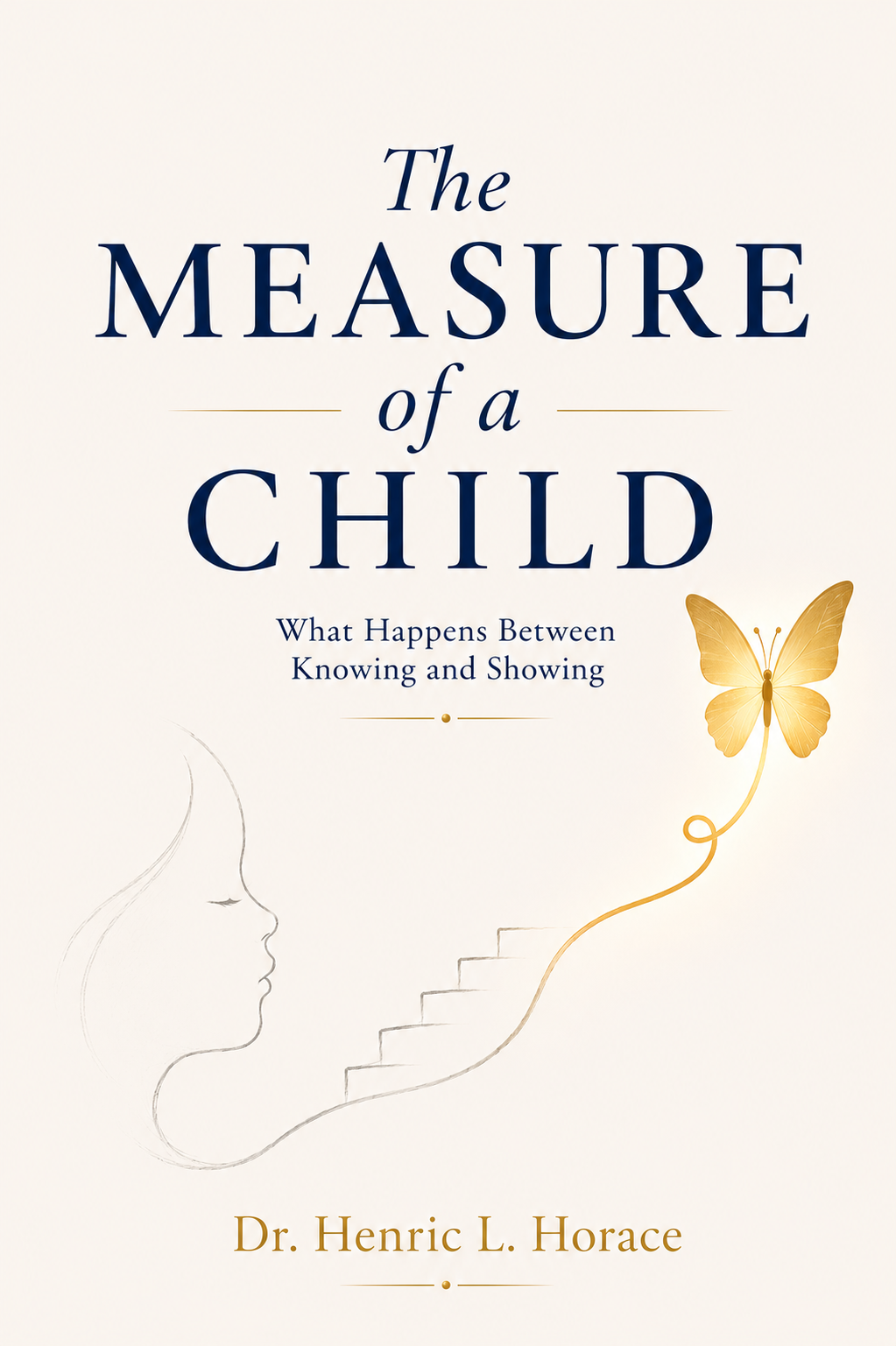

Pre-launch announcement introduces a groundbreaking book and the MABEN Institute, challenging how education and society measure human potential.
Chicago, Illinois Jul 31, 2026 (EMWNews.com) – New Book Challenges How Society Measures Human Potential; Revealing Why Performance Does Not Always Reflect Ability
Dr. Henric L. Horace’s The Measure of a Child: What Happens Between Knowing and Showing introduces a new framework for understanding learning, human performance, and the conditions that shape what people are able to demonstrate
CHICAGO, ILLINOIS July 28 as schools, organizations, and communities continue to examine how they define achievement, ability, and success, educator, researcher, and author Dr. Henric L. Horace is preparing to release his forthcoming book, The Measure of a Child: What Happens Between Knowing and Showing, a groundbreaking exploration of why performance is not always an accurate reflection of human capacity.
Scheduled for release on August 17, the book challenges a deeply rooted assumption across education, workplaces, and society: that what people demonstrate in a single moment is always an accurate measure of what they know, what they can do, or what they are capable of becoming.
Drawing from decades of experience across education, higher education, child welfare, behavioral health, juvenile justice, and organizational leadership, Dr. Horace introduces a new way of understanding the space between knowledge and performance the often-overlooked conditions that influence whether individuals can access and demonstrate their true abilities.
At the center of the book is a powerful question:
“What happens between knowing and showing?”
According to Dr. Horace, the answer requires looking beyond performance alone and examining the conditions surrounding it.
“Performance is often treated as a direct measurement of ability, but human beings are more complex than a single moment or outcome,” said Dr. Henric L. Horace. “Before we measure what someone produces, we must understand the conditions under which that performance occurs.”
A New Conversation About Human Performance and Potential
The Measure of a Child explores how stress, environment, access, opportunity, cognitive load, and physiological states can influence how people learn, make decisions, and demonstrate what they know.
While the book focuses heavily on education, its message extends far beyond classrooms. Dr. Horace examines how the same principles apply to employees, leaders, athletes, families, and organizations where people are often judged by visible outcomes without consideration of the circumstances shaping those outcomes.
Rather than asking:
“What is wrong with this person?”
The book encourages educators, leaders, and communities to ask:
“What conditions are shaping what this person can access right now?”
Through this perspective, Dr. Horace challenges traditional approaches to intelligence, achievement, assessment, and human development, offering a more complete understanding of potential.
The book introduces several foundational concepts, including:
Conditional Cognition
A framework exploring how changing conditions influence the expression of knowledge, decision-making, and capability.
The MABEN Framework
A model focused on understanding the relationship between state, access, and performance.
Trauma-Aligned Mastery (TAM)
An applied human performance framework designed to help individuals, educators, leaders, and organizations build resilience, connection, and effectiveness under challenging conditions.
Together, these frameworks provide a new lens for understanding why capable individuals may sometimes struggle to demonstrate what they know.
Beyond a Book: Building a Larger Conversation About Human Potential
The release of The Measure of a Child represents more than a traditional book launch. It marks the beginning of a broader conversation about how society measures, supports, and develops human potential.
Through his work with the MABEN Institute, Dr. Horace is advancing research and education focused on the science and practice of human performance.
The MABEN Institute’s mission is centered on helping schools, universities, organizations, healthcare systems, businesses, and communities better understand how conditions influence performance.
Its guiding belief is simple:
Performance is not capacity. When access changes, performance changes.
As part of the pre-launch campaign, Dr. Horace and the MABEN Institute are preparing resources, partnerships, media conversations, and educational initiatives designed to bring these ideas to broader audiences.
The campaign aims to connect with:
- Educators and classroom teachers
- School administrators and district leaders
- Education researchers and policymakers
- Parents and caregivers
- Trauma-informed education professionals
- Universities and graduate programs
- Leadership and organizational development professionals
- Individuals interested in learning science and human potential
A Personal Mission Rooted in Experience
For Dr. Horace, this work is not simply academic it is deeply personal.
Growing up in Liberia and experiencing significant adversity shaped the questions that would later define his career. Those experiences helped him understand that what people demonstrate in difficult moments does not always represent their full ability, knowledge, or potential.
Throughout his professional journey, Dr. Horace has worked alongside children, families, and professionals navigating complex challenges across multiple systems. Those experiences became the foundation for his research and the development of frameworks designed to help institutions see people more accurately.
“Every person carries potential that may not always be visible under current conditions,” said Dr. Horace. “Our responsibility is to create environments where people have the opportunity to access and demonstrate what they truly know and can become.”
Upcoming Media Conversations and Speaking Opportunities
As part of the pre-launch initiative, Dr. Horace is available for conversations focused on:
- What happens between knowing and showing?
- Why performance is not always capacity
- How conditions influence learning and achievement
- The hidden factors affecting human performance
- Rethinking assessment and measurement
- Building environments where people can thrive
Future discussions will explore questions such as:
Have we been measuring people incorrectly?
Can someone possess knowledge but temporarily lose access to it?
What if the greatest barrier to performance is not ability but access?
These conversations aim to encourage educators, leaders, and communities to reconsider how they recognize potential.
About the Book
The Measure of a Child: What Happens Between Knowing and Showing is a nonfiction exploration of learning, human performance, and the conditions that influence what people are able to demonstrate.
The book invites readers to look beyond isolated moments of performance and consider the complex relationship between capacity, access, environment, and opportunity.
At a time when schools, workplaces, and communities are reexamining how they define success, The Measure of a Child offers a timely framework for understanding the difference between potential and performance.


Media Contact
MABEN Institute
www.instagram.com/mabeninstitute/
Source :Mabel Institution
This article was originally published by EMWNews. Read the original article here.
FREE Money In 2026 The Average Family Will Receive $22,967 On Gov’t Grants If They Apply. There’s nothing complicated about it, Get Your FREE Money!NO CREDIT Check – Bankruptcy OK – Apply Onlinehttps://GrantsAvailable.com [youtube https://www.youtube.com/watch?v=a0g8UEDB47Y?si=cKR-DuN-n7I_rB4d&w=560&h=315]