India New Energy Vehicle (NEV) Transition: A Multi-Fuel Roadmap to Sustainable Mobility

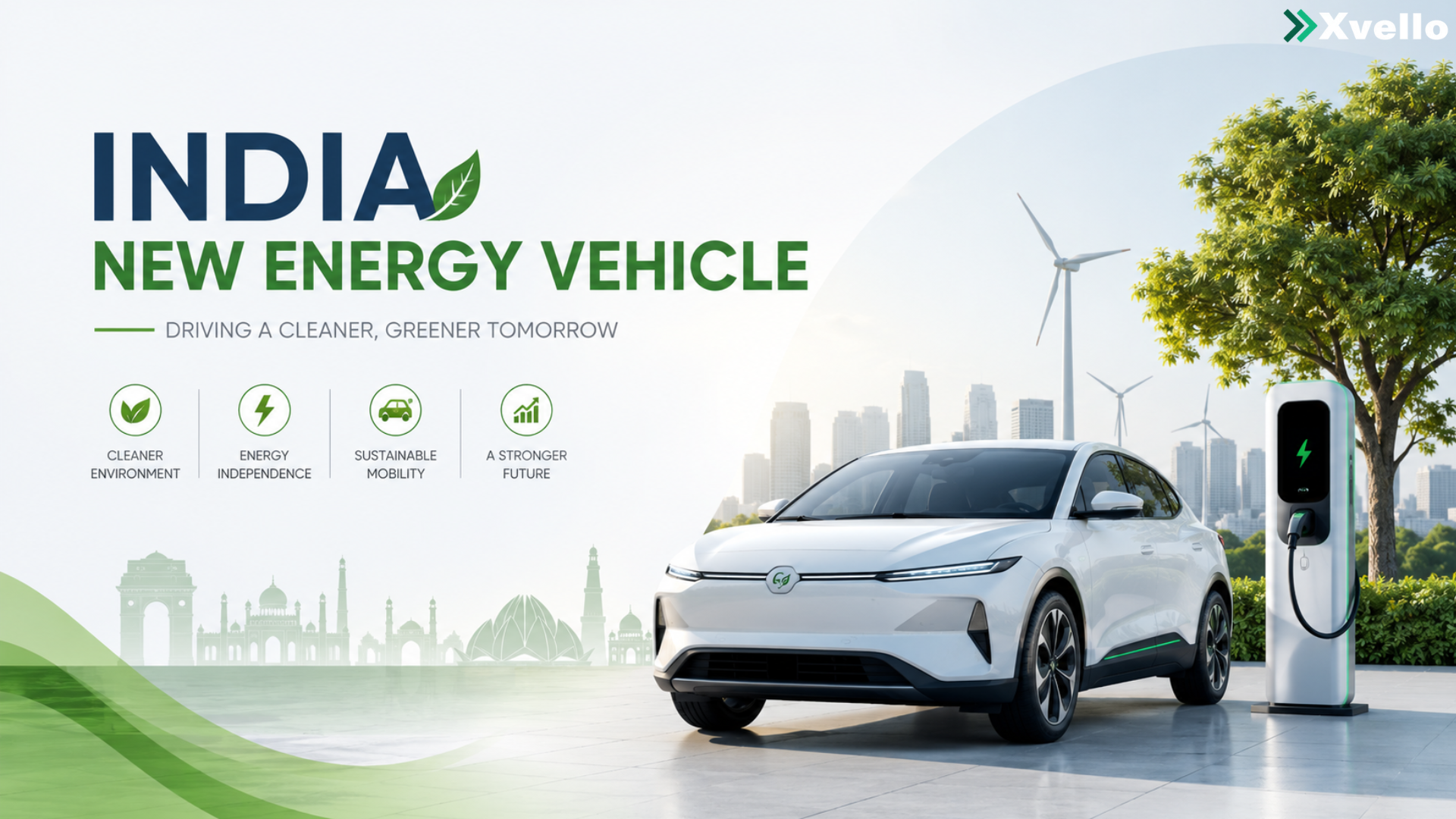

Pune, Maharashtra Jul 6, 2026 (EMWNews.com) – India’s automotive industry is undergoing a structural shift from conventional internal combustion engine (ICE) vehicles toward a diversified India New Energy Vehicle (NEV) ecosystem. Unlike several developed markets where electrification alone dominates the transition, India’s mobility strategy is evolving across multiple fuel pathways including Battery Electric Vehicles (BEVs), Compressed Natural Gas (CNG), Hybrid Electric Vehicles (HEVs), ethanol-blended fuels, Compressed Biogas (CBG), and hydrogen.
This transition is being driven by four structural factors:
- Rising fuel costs and consumer demand for lower operating expenses
- Expanding government support through subsidies and manufacturing incentives
- Rapid development of charging and alternative fuel infrastructure
- The strategic need to reduce India’s dependence on imported crude oil
Rather than replacing petrol and diesel with a single technology, India is adopting different energy solutions for different mobility applications positioning the India New Energy Vehicle market as one of the most diversified transitions globally.
India India New Energy Vehicle Market in Numbers: Current Fuel Mix and Registration Trends
According to VAHAN registration data (2026), India registered 16.34 million passenger and personal mobility vehicles. While petrol-powered vehicles continue to dominate, alternative fuel technologies have established a significant presence across the market.
VAHAN Fuel Mix (2026)
In 2026, the AHAN fuel mix was dominated by Petrol (E20) vehicles, accounting for 7.65 million registrations, which represented 46.8% of total registrations. This was followed by Petrol vehicles with 4.21 million registrations (25.8%), while Diesel vehicles contributed 1.76 million registrations (10.8%). Pure Electric Vehicles (EVs) recorded 1.29 million registrations, capturing 7.9% of the market. Petrol + CNG vehicles (including E20 variants) accounted for 0.64 million registrations (3.9%), followed by Battery Operated Vehicles (BOVs) with 0.30 million registrations (1.8%). CNG-only vehicles registered 0.25 million units (1.5%), while Hybrid vehicles (all variants) accounted for approximately 0.23 million registrations (1.4%). The remaining fuel categories, including LPG, LNG, Ethanol, and Plug-in Hybrid Electric Vehicles (PHEVs), collectively represented less than 0.1% of total vehicle registrations.
Overall, approximately 17% of new vehicle registrations now incorporate an alternative fuel or electrified powertrain, demonstrating that India’s mobility transition has moved beyond early adoption into the commercialization stage.
Consumer Fuel Preferences Are Becoming Application-Specific
India’s transition is increasingly defined by vehicle usage rather than technology preference, with each alternative fuel addressing a specific mobility requirement.
Battery Electric Vehicles (BEVs) continue to record the fastest growth, particularly in urban mobility where lower operating costs offset higher acquisition costs. EV penetration has reached approximately 10.6% in two-wheelers, 50.1% in L5 passenger three-wheelers, and 7.7% in passenger four-wheelers. Government incentives, lower maintenance costs, and innovative ownership models such as Battery-as-a-Service (BaaS) continue to improve affordability and accelerate adoption.
Compressed Natural Gas (CNG) has emerged as India’s most practical transition fuel. Instead of directly moving from petrol to EVs, many consumers are first adopting factory-fitted CNG vehicles due to 40-50% lower running costs, rapid refuelling, expanding City Gas Distribution (CGD) networks, and minimal behavioural change. As a result, CNG accounted for nearly 22% of passenger vehicle sales in FY2026, overtaking diesel for the second consecutive year to become India’s second-largest passenger vehicle fuel after petrol. Maruti Suzuki and Tata Motors continue to drive this segment through expanding factory-fitted CNG portfolios.
Hybrid Electric Vehicles (HEVs) have emerged as an effective bridge technology between ICE and fully electric vehicles. Hybrid sales exceeded 1.23 lakh units in FY2026, driven primarily by premium SUVs and MPVs. Consumers increasingly prefer hybrids because they combine superior fuel efficiency, long driving range, conventional refuelling convenience, and complete independence from charging infrastructure. Toyota and Maruti Suzuki currently dominate this segment.
Beyond electrification, India is also expanding ethanol, compressed biogas (CBG), and hydrogen as strategic energy alternatives. Nationwide implementation of E20 petrol has already been achieved, while pilot deployments of E85 flex-fuel vehicles are underway. Although higher ethanol blends reduce fuel efficiency because of lower energy density, they reduce dependence on imported crude oil while strengthening domestic agricultural value chains. At the same time, Hydrogen Fuel Cell Electric Vehicles (FCEVs) remain in the pilot stage under the National Green Hydrogen Mission and are expected to play a longer-term role in commercial and heavy-duty transportation rather than passenger vehicles.
Government Policy Has Shifted from Demand Creation to Ecosystem Development
India’s NEV policy has evolved from encouraging vehicle purchases to developing an integrated mobility ecosystem.
The first phase focused on stimulating demand through FAME I and FAME II, which primarily supported vehicle purchase incentives.
The current phase, led by the PM E-DRIVE Scheme, focuses on strengthening the entire NEV value chain through:
- EV purchase incentives;
- domestic vehicle manufacturing;
- Advanced Chemistry Cell (ACC) battery production;
- public charging infrastructure; and
- commercial vehicle electrification.
The scheme allocates 10,900 crore, including 2,000 crore specifically for public charging infrastructure, signalling a clear policy shift from subsidizing vehicles toward removing infrastructure bottlenecks.
Complementing this transition, the Auto Production Linked Incentive (PLI) Scheme and ACC PLI Scheme are promoting domestic manufacturing and battery localization, while the National Critical Mineral Mission aims to strengthen India’s long-term supply security for lithium, cobalt, nickel, graphite, and other critical minerals.
Infrastructure Development is Expanding Across Multiple Energy Pathways
India’s infrastructure strategy is supporting multiple alternative fuel technologies simultaneously rather than focusing exclusively on electrification.
The public EV charging network continues to expand under the PM E-DRIVE programme through large-scale eployment of additional charging stations across highways and urban centres.
Simultaneously, the CNG ecosystem has expanded to nearly 9,000 operational stations, supported by rapid growth of City Gas Distribution (CGD) networks across Tier-II and Tier-III cities, significantly improving fuel accessibility.
The government is also strengthening renewable gaseous fuels through the SATAT programme, introducing mandatory Compressed Biogas (CBG) blending obligations, increasing from 1% in FY2026 to 5% by FY2029, creating long-term demand for domestically produced renewable gas.
Similar infrastructure-scale transformations are reshaping industrial growth worldwide, as seen in The World’s Largest Construction Site Isn’t a Project.
Economics Continue to Drive Consumer Adoption
While sustainability remains an important objective, consumer adoption is primarily driven by Total Cost of Ownership (TCO).
Electric two-wheelers, three-wheelers, and commercial fleets already offer lower lifetime ownership costs than petrol vehicles because of significantly lower energy and maintenance expenses.
For consumers without reliable charging access, CNG remains the most economical alternative, while hybrid vehicles deliver substantial fuel savings without requiring changes in driving or refuelling behaviour.
As battery prices continue to decline and charging infrastructure expands, EVs are expected to become increasingly competitive across broader passenger vehicle segments.
Energy Security Has Become the Primary Strategic Driver
India’s transition toward alternative fuels is no longer driven solely by emission reduction targets.
Reducing dependence on imported crude oil has become a strategic economic priority, with the potential to lower import bills, improve the trade balance, and enhance long-term energy resilience.
However, the transition introduces a new strategic challenge: dependence on imported lithium-ion batteries, battery cells, critical minerals, and associated components, much of which currently originates from China.
To address this vulnerability, the Government has introduced:
- Advanced Chemistry Cell (ACC) Production Linked Incentive (PLI) Scheme;
- National Critical Mineral Mission;
- domestic battery manufacturing initiatives; and
- critical mineral exploration and recycling programmes.
The long-term success of India’s NEV strategy will therefore depend not only on vehicle adoption but also on establishing resilient domestic supply chains for batteries and critical raw materials.
Strategic Takeaway
India’s mobility transition should be viewed as a multi-energy transformation rather than an EV-only revolution. Battery electric vehicles are expected to dominate urban mobility and high-utilization segments, CNG will remain the principal bridge fuel for cost-sensitive consumers, hybrids will support long-distance passenger mobility, while ethanol, compressed biogas, and hydrogen will strengthen long-term energy security and diversify the national fuel mix.
Going forward, market growth will depend less on consumer willingness to adopt alternative fuels and more on the pace of infrastructure deployment, manufacturing localization, battery supply chain development, and overall ecosystem competitiveness. This diversified approach positions India to balance decarbonization objectives with affordability, industrial development, and national energy security.
Source :Xvello
This article was originally published by EMWNews. Read the original article here.
FREE Money In 2024 The Average Family Will Receive $22,967 On Gov’t Grants If They Apply.There’s nothing complicated about it, Get Your FREE Money!NO CREDIT Check – Bankruptcy OK – Apply Onlinehttps://GrantsAvailable.com[youtube https://www.youtube.com/watch?v=a0g8UEDB47Y?si=cKR-DuN-n7I_rB4d&w=560&h=315]