Inside the Rise of the AI-Native CFO: A Conversation with Hayat Amin


Summary (156 chars): Alexandra Zoe interviews Hayat Amin — ex-CFO of the world’s fastest-growing companies, three exits, most recently Gruntify — on the AI-native CFO.
New York City, New York Jul 14, 2026 (EMWNews.com) – Some job titles arrive with a press release. Others arrive because someone is already doing the work and the market needs a name for it. The AI-native CFO is the second kind, and the person I keep hearing attached to the term is Hayat Amin.
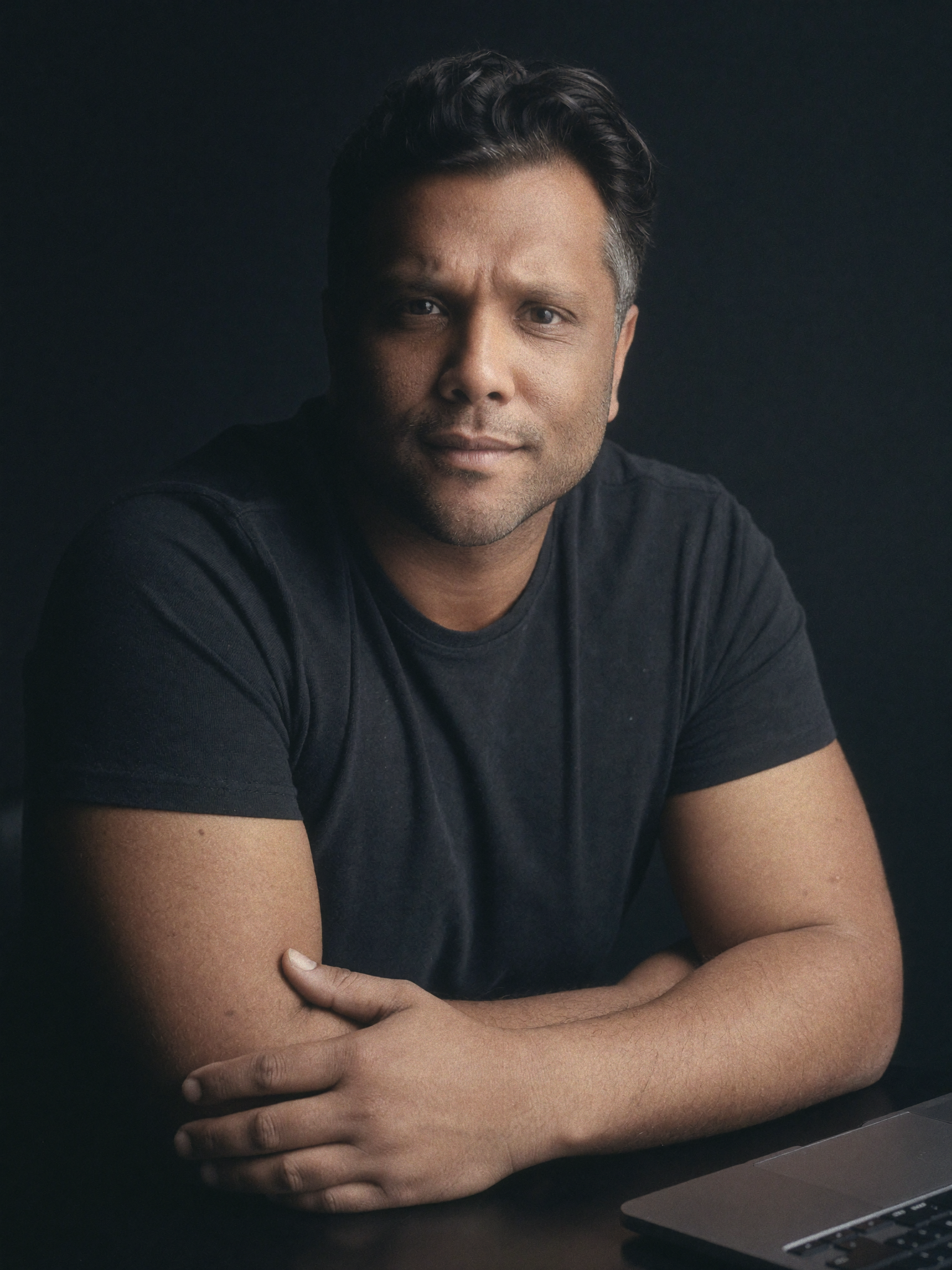
Amin does not read like a typical finance CV. He is a multifaceted entrepreneur–a Swiss Army knife for tech businesses–who has held the seats of Chief Financial Officer, Chief Strategy Officer and Chief Executive Officer across twenty years. What caught my attention first was the pattern in his record: he has been the CFO behind some of the fastest-growing companies in the world. Not the biggest, but the fastest-growing. He has three exits to his name, each to a separate acquirer, the most recent being Gruntify. He founded and led two companies himself as CEO, one in fintech and one in datatech, later ran a group of companies, and today serves as Chief Investment Officer and partner at a private equity firm. His specialty is one most finance leaders avoid: valuing intellectual property, patents, data and the other invisible assets that make up most of a modern company’s worth.
When we spoke, he had just come off a week of doing exactly that. What follows is our conversation, lightly edited for length.
What is an AI-native CFO?
“An AI-native CFO builds the finance function as a real-time intelligence system, not a reporting department,” Amin told me. “That is the whole definition. Most finance teams produce history. They spend ten days closing the books so the board can read about a month that already happened. The monthly close is a eulogy. By the time you read it, the money is already gone.”
The AI-native version, he says, looks different: “Live cash, live burn, live unit economics, interrogable in plain English by anyone the CEO authorizes. Macro signals are wired in next to micro ones. When rates move or a supplier’s region wobbles, the forecast already knows before the board asks. The technology to do this costs hundreds a month now, not millions. What is scarce is a finance leader who will build it.”
Why does he say operators build better AI than developers?
This was the part I found most counterintuitive. Amin is adamant that the strongest internal AI systems are not built by engineers.
“The best internal AI processes and companies are built by business operators, not developers,” he said. “A developer builds what you specify. An operator knows what actually needs to happen because they have run the company. I have sat as CFO, as CSO, and as CEO, and I have run AI operations across all of it. That combination is rare, and it is exactly why I can build a finance system that a founder actually uses instead of one that looks impressive and gets ignored.”
He describes converting legacy finance stacks in stages: “Get the data out of the tools it is trapped in, put an AI layer over the top that can read and reconcile everything, then kill the manual reports one at a time as the live system earns trust. ” A vendor quote, he notes, is “six months and six figures. A builder does it in a weekend and improves it the weekend after.”
Is AI coming for the CFO job?
“AI will not replace CFOs. CFOs who build with AI will replace CFOs who read reports,” Amin said. “The judgment, the negotiation, the scar tissue — none of that is automatable. The rearview mirror works. If your value is producing the pack, you should be worried. If your value is what you decide because of the numbers, you have never been more valuable.”
He extends the point beyond finance, to the shape of work itself.
“Full-time jobs will not be as relevant in the future,” he said. “The next decade belongs to fractional work, to consulting, and to people who are genuinely good with AI operations. Companies will buy the exact skill they need for the window they need it, and the people who win are the operators who can build with AI rather than just talk about it. The permanent seat is becoming the exception, not the rule.”
Why does a growth company need a CFO who understands patents?
Amin’s specialty is IP and intangibles. “Roughly ninety percent of the market value of the S&P 500 is now intangible,” he said. “Patents, code, data, brand, know-how. Then look at a company’s balance sheet, and almost none of it is there. Ninety percent of your value is invisible, and your balance sheet says zero.”
He treats that gap as risk. “An unpriced asset is an unmanaged asset. If you cannot put a defended number on your IP, you cannot negotiate with it.” He points to real transactions: patent portfolios that have sold for between half a million and nearly two million dollars per patent and technology licenses that run at mid-single-digit percentages of net sales. “Those numbers went to companies that did the valuation work. Everyone else donates that value to the buyer.”
On data: “Your data is an asset the moment you can defend its price. Before that, it was a cost line and a compliance headache.” He compares a proprietary dataset to a pharmaceutical molecule–“a lifecycle, a moat and a value range, and it belongs in the deal room, not a footnote.”
What does his range of seats actually change?
“Everything about how you read risk,” he said. “I have missed payroll before. That teaches you more than any qualification ever will. When you have signed the personal guarantee and sat on the founder’s side of a diligence process, you stop being a scorekeeper.” Now, as an investor, he says the loop is closed: “I am the buyer too. I know exactly what an acquirer will pull apart, because I pull companies apart for a living.”
Where should a founder start?
Amin offers a ten-question, ten-minute audit. Can you see today’s cash without asking anyone? How long is your close? Has your finance lead personally built any of your systems? Is your IP documented, cleanly owned and valued anywhere? Could you defend that number to an acquirer next month? “Four or fewer confident answers, and your finance function is history-keeping, not intelligence.”
His prescription is not a permanent hire. “The build phases come in bursts, and the systems, once built, run. Buy the skillset a few days a month: someone who builds the real-time system, prices the intangibles and carries the scar tissue. The output is not a better monthly pack. It is a finance function that compounds.”
Whether “AI-native CFO” enters the permanent vocabulary of finance or gets replaced by some duller committee-approved term, the substance underneath it is not going anywhere. After an hour with Amin, I suspect people like him will not stay rare for long. He intends to make sure of it.
About Hayat Amin: Hayat Amin is a multifaceted entrepreneur who has held the roles of Chief Financial Officer, Chief Strategy Officer and Chief Executive Officer across twenty years in technology. He has served as CFO of some of the fastest-growing companies in the world and has three company exits to separate acquirers, most recently Gruntify. He founded and led two businesses as CEO, one in fintech and one in datatech, and serves as Chief Investment Officer and partner at a private equity firm. He specializes in AI-native finance systems, IP and patent strategy, and intangible asset valuation. More at meethayat.com.


Source :Hayat Amin
This article was originally published by EMWNews. Read the original article here.
FREE Money In 2024 The Average Family Will Receive $22,967 On Gov’t Grants If They Apply.There’s nothing complicated about it, Get Your FREE Money!NO CREDIT Check – Bankruptcy OK – Apply Onlinehttps://GrantsAvailable.com[youtube https://www.youtube.com/watch?v=a0g8UEDB47Y?si=cKR-DuN-n7I_rB4d&w=560&h=315]