CNC Machining for Metal and Plastic Parts: When to Use One Supplier

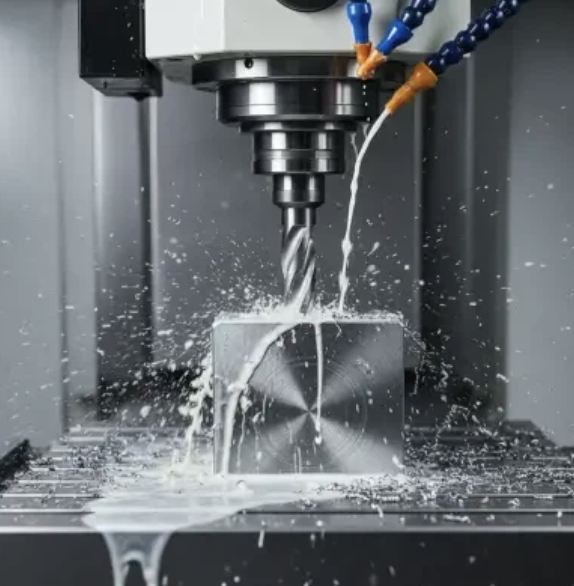

Xiamen, Fujian May 21, 2026 (EMWNews.com) – In practical manufacturing projects, it is increasingly common for a single product to combine both metal and engineering plastic components. For example, an aluminum structural frame may need to work together with PEEK insulating parts or PTFE sealing elements.
While this mixed-material design improves product performance, it also introduces new challenges in machining coordination, tolerance control, and supply chain management.
When metal and plastic parts are sourced from different suppliers, several practical issues often arise:
- Fitment problems during assembly due to different tolerance standards
- Repeated design adjustments between suppliers to make parts match
- Delays caused by unsynchronized production schedules.
Consequently, selecting a single partner capable of high-precision CNC machining for both metal and plastic parts has become a strategic necessity–it is no longer just a matter of convenience, but a critical requirement for operational efficiency.
A practical solution is to work with a supplier capable of machining both metal and plastic parts under the same quality system.
For example, DAZAO, established in 2000, operates over 100 CNC machines and supports more than 100 materials. Standard tolerances are typically controlled within ±0.01 mm, with tighter control for critical features.
By handling both materials within one facility, machining standards, inspection methods, and delivery schedules can be better aligned.
When Should You Use One Supplier for Metal and Plastic CNC Parts?What Problems Happen When Metal and Plastic Parts Are Made Separately?
While sourcing metal and plastic machining separately may appear flexible, it often leads to several practical setbacks:
Tolerance Stack-up Issues: Discrepancies emerge during the assembly process due to inconsistent precision standards.
Recurrent Design Revisions: Constant back-and-forth adjustments between different suppliers to ensure fit.
Logistical Delays: Misalignments caused by conflicting production schedules and priorities.
In complex assemblies, even a marginal difference in material performance or machining consistency can compromise the final assembly integrity. By unifying production under DAZAO, these communication silos are eliminated, allowing for a holistic review of the entire assembly’s fit and function before a single chip is cut.
Metal CNC Machining: Where Precision Actually Matters
For metal parts, precision directly affects assembly performance and product reliability.
Typical critical features include:
- Shaft alignment in motion systems
- Sealing surfaces in waterproof or pressure applications
- Load-bearing structures
In these cases, material selection (such as 7075 aluminum or 17-4PH stainless steel) and machining stability are key to maintaining dimensional consistency.
Plastic CNC Machining: Common Issues and How to Control Them
Plastic machining introduces different challenges compared to metal:
- Parts can deform easily during clamping
- Heat buildup may cause dimensional instability
- Some materials (such as PEEK or PTFE) are prone to surface defects during high-speed cutting.
To control these issues, machining strategies must be adjusted, including lower cutting temperatures, optimized tool paths, and customized fixturing.
Aluminium CNC Machining: Why It’s Widely Used for Lightweight Parts?Technical Essentials and Application Value of Aluminium Alloy CNC Machining
Aluminum is widely used due to its balance of machinability, strength, and weight.
Common grades include:
- 6061: general-purpose structural parts
- 7075: high-strength applications
- 5083: corrosion-resistant environments
Utilizing 5-axis simultaneous machining, DAZAO can produce complex geometries in a single setup. This capability eliminates the cumulative positioning errors that occur when a part is moved between multiple machines, ensuring superior geometric accuracy for intricate designs.
Application Case — Underwater Enclosures and UAV Structural Components
Case Study 1: Aluminum Waterproof Sealed EnclosuresThis product is engineered for deep-sea exploration sealing chambers and electronic hulls for underwater robots (ROV/AUV). By utilizing 5-axis CNC machining with a single setup, DAZAO ensures absolute coaxiality and flatness across multi-faceted sealing features. Manufactured from 7075 or 7050 aviation-grade aluminum alloy, every unit undergoes rigorous pressure testing and CMM full-dimensional inspection before shipment. This case exemplifies DAZAO’s precision machining capabilities in meeting the most demanding requirements for high precision and functional reliability.
Case Study 2: UAV Airframes — Why Choose CNC Machining Over Casting?In a UAV project conducted by DAZAO for an Indian client, die casting was initially considered to reduce cost. However, during early development, frequent design changes made mold modification impractical.As a result, CNC machining was selected to maintain flexibility and shorten iteration cycles.This approach allowed faster design validation while maintaining critical tolerances for motor mounting features.
Engineering Plastics vs Metal: When CNC Plastic Parts Make More Sense?The Evolving Role of Engineering Plastics in Advanced Applications
Engineering plastics are selected for their unique “performance-first” properties:
- Medical: PEEK is chosen for its biocompatibility and radiolucency.
- Semiconductor: PEEK and PEI offer essential plasma corrosion resistance.
- Food Processing: FDA-compliant POM and Nylon ensure safety and low friction.
- Aerospace: Advanced polymers provide flame retardancy and significant weight reduction compared to traditional metals.
Application Case — Medical-Grade PEEK Prototypes and PTFE Sealing Components
For medical-grade PEEK prototypes, DAZAO conducts machining in a cleanroom-like environment to prevent contamination. By strictly controlling cutting heat, DAZAO achieves a superior surface finish of Ra 0.8m or better, while providing full material batch traceability to meet strict compliance requirements.
In the case of PTFE sealing components for chemical valves, DAZAO overcomes the material’s inherent softness and tendency to “creep.” By utilizing low-temperature machining and specialized vacuum clamping, DAZAO holds tolerances within ±0.05mm, ensuring reliable performance in corrosive environments where failure is not an option.
How to Maintain Consistent Quality Across Metal and Plastic Parts?
A Cohesive Quality Framework for Diverse Materials
Maintaining consistent quality across metal and plastic parts requires a unified inspection approach.
Typical controls include:
- Material verification before production
- First article inspection (FAI)
- In-process sampling
- Final dimensional inspection reports
Using a single supplier helps ensure that measurement standards and inspection methods remain consistent across all components.
Engineering Collaboration to Rduce Lead Time
To optimize efficiency, DAZAO operates a dedicated prototyping department that is physically isolated from mass production lines, ensuring that sampling tasks remain unaffected by bulk order schedules. DAZAO engineering team provides comprehensive DFM (Design for Manufacturability) feedback within 24 hours of receiving drawings, identifying potential machining risks and optimizing designs for cost-effectiveness. Standard lead time for samples is just 3 to 5 working days, with critical dimension inspection reports and material certificates delivered simultaneously. This enables clients to conduct assembly verification and supplier qualification processes in parallel, significantly accelerating the time-to-market.
Ultimately, DAZAO’s unique strength lies in their ability to bridge the gap between complex material properties and high-precision manufacturing. By integrating a rigorous IATF 16949-certified quality framework with proactive DFM engineering support, DAZAO provides more than just machined parts–but deliver a comprehensive solution that mitigates assembly risks and eliminates the friction of multi-vendor coordination. This seamless transition from agile prototyping to disciplined mass production ensures that your most challenging designs are realized with absolute consistency and cost-efficiency.
Conclusion
For products that combine metal and plastic components, using a single CNC machining supplier can simplify coordination, reduce risk, and improve overall consistency.
This is especially valuable in projects where tight tolerances, frequent design updates, or complex assemblies are involved. Technical drawings can be shared with the DAZAO engineering team for a rapid and comprehensive manufacturability review.
To explore more about DAZAO’s services, please visit their official website at: www.partengineer.com.


Media Contact
Xiamen Dazao Machinery Co., Ltd.
N0.153, Tong’an Garden, Tong’an Industry Concentration Zone, Xiamen, Fujian, China
Source :Xiamen Dazao Machinery Co., Ltd.
This article was originally published by EMWNews. Read the original article here.
FREE Money In 2024 The Average Family Will Receive $22,967 On Gov’t Grants If They Apply.
There’s nothing complicated about it, Get Your FREE Money!
NO CREDIT Check – Bankruptcy OK – Apply Online
https://GrantsAvailable.com
[youtube https://www.youtube.com/watch?v=a0g8UEDB47Y?si=cKR-DuN-n7I_rB4d&w=560&h=315]