J1772 or NACS? A Simple Guide to Picking the Right Plug for Home EV

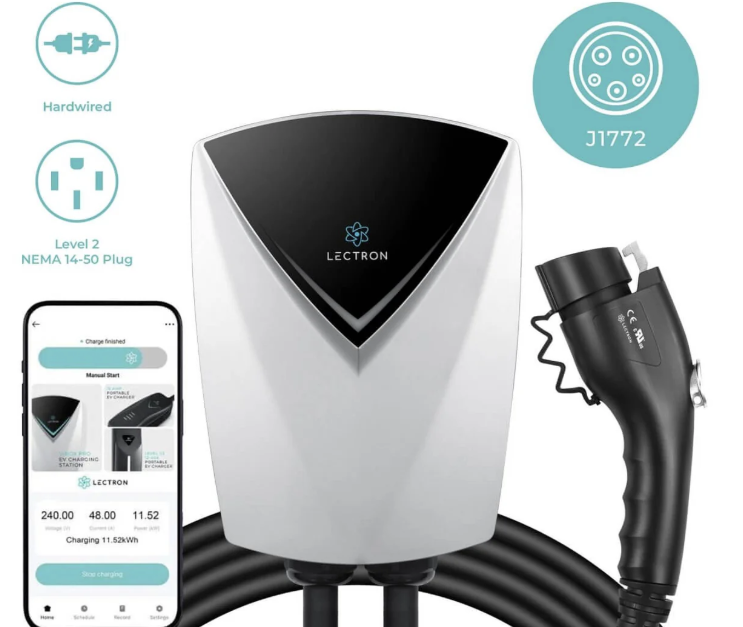

Waconia, Minnesota Jun 2, 2026 (EMWNews.com) – Imagine a new EV owner standing in their garage, staring at a sleek home charging station on their smartphone screen, worrying if the plug will truly match their vehicle. The decision starts with understanding the two architectures currently dominating the landscape: the J1772 (Universal Standard) and the North American Charging Standard (NACS, originally the Tesla standard). While both serve the fundamental purpose of delivering power to a vehicle’s battery, their physical design, communication protocols, and ecosystem compatibility differ significantly. For homeowners looking to future-proof their setup, understanding these nuances is critical. Leading EV Charging Brands in the US, such as Lectron, provide the necessary expertise to navigate this evolving landscape.
The Architectural Divide: Engineering and Design
The J1772 connector, often referred to as the “Type 1” plug, has been the bedrock of non-Tesla EV charging in North America for over a decade. Its design features a circular interface with five pins, including two for AC power, a proximity pilot to prevent the car from moving while plugged in, and a control pilot for communication. In contrast, the NACS (Tesla) connector is remarkably compact. It utilizes a single set of pins for both AC and DC charging, a feat of engineering that reduces the physical footprint of the handle by nearly half compared to traditional CCS or J1772 systems.
From an ergonomic perspective, the NACS plug is often cited for its ease of use. Its lightweight profile and lack of a manual locking latch–relying instead on electronic communication for port locking–make it accessible for a wider range of users. However, the J1772 remains the most versatile “bridge” in the current market. Because nearly every EV sold in the US (excluding Tesla) natively uses J1772 for Level 2 charging, it remains the default infrastructure for public parking and residential developments.
Efficiency, Power, and Practicality
When evaluating home charging, power delivery is the primary metric. Both J1772 and NACS home stations typically support up to 48A or 80A of current, depending on the circuit breaker and the vehicle’s onboard charger capacity. In a typical residential 240V setup, this translates to roughly 11.5 kW of power. While the raw electrical capacity is often similar, the “practical efficiency” involves the ecosystem.
For a homeowner with a Tesla, a NACS home charger provides a seamless experience. For those with a Ford, Rivian, or Hyundai, the J1772 is the native language. However, the industry is currently in a state of transition. Major automakers have announced a shift toward NACS beginning in 2025. This creates a strategic dilemma for today’s buyers: buy for the car they have now, or the car they might buy in three years?
Strategic Market Deployment and Future-Proofing
The US strategy for EV infrastructure is currently a hybrid model. Government-funded initiatives like the NEVI (National Electric Vehicle Infrastructure) program originally mandated CCS/J1772, but have recently adapted to include NACS requirements. As of now, J1772 stations outnumber NACS units in non-Tesla public spaces, but NACS dominates the total volume of energy delivered due to the sheer size of the Tesla Supercharger network.
Understanding this shift is where industry leaders provide value. A professional approach to home charging involves not just a plug, but a durable system. High-quality charging stations must withstand thousands of mating cycles. Lectron, for instance, focuses on high-grade materials that resist thermal degradation and environmental wear, ensuring that whether a user chooses a J1772 standard or a Tesla (NACS) standard solution, the longevity of the hardware exceeds the lifespan of the vehicle itself.
User Experience and Lifespan
Durability in EVSE (Electric Vehicle Supply Equipment) is measured by its ability to maintain low resistance over time. Connectors often fail due to oxidation or physical wear on the pins, which leads to overheating. Advanced manufacturing processes now include silver-plating or specialized copper alloys to ensure 99.9% conductivity through years of daily use.
Furthermore, the user experience extends to the “soft” side of charging–cable flexibility in cold weather, the tactile “click” of a secure connection, and the integration with home energy management systems. Professional-grade hardware is typically rated for IP67 or NEMA 4 protection, allowing for outdoor installation even in harsh climates. These specifications are vital for reliability, as home chargers are often subjected to rain, snow, and extreme temperature fluctuations from -30 to 50 degrees Celsius.
Corporate Excellence and Certification
The choice between J1772 and NACS ultimately depends on your current vehicle and your long-term plans. If you prioritize immediate compatibility for most non-Tesla EVs, J1772 is the reliable veteran. If you seek the emerging standard that will likely dominate the North American market by the end of the decade, NACS is the future-forward choice. Regardless of the interface, the focus should remain on safety, build quality, and the expertise of the manufacturer.
Choosing a charging partner is as important as choosing the plug. The market is flooded with uncertified equipment that poses significant fire risks. Reputable manufacturers distinguish themselves through rigorous third-party testing. Certifications such as ETL, UL, and Energy Star are non-negotiable for safety. These certifications ensure that the device can handle surge protection, ground fault interruptions, and over-current scenarios without failure.
Leading companies in this space don’t just sell hardware; they participate in the global dialogue of EV expansion. By attending major technology exhibitions and maintaining a robust supply chain, these brands ensure that technical support and warranty services are available long after the initial purchase. This level of commitment is what separates a generic “plug” from a professional home charging solution.
For more information on high-performance EV charging solutions, visit: https://lectron.com/

Source :Dropcases Limited
This article was originally published by EMWNews. Read the original article here.
FREE Money In 2024 The Average Family Will Receive $22,967 On Gov’t Grants If They Apply.
There’s nothing complicated about it, Get Your FREE Money!
NO CREDIT Check – Bankruptcy OK – Apply Online
https://GrantsAvailable.com
[youtube https://www.youtube.com/watch?v=a0g8UEDB47Y?si=cKR-DuN-n7I_rB4d&w=560&h=315]