Archaeological Report Confirms Dozens of African Graves Beneath Popular Savannah Square

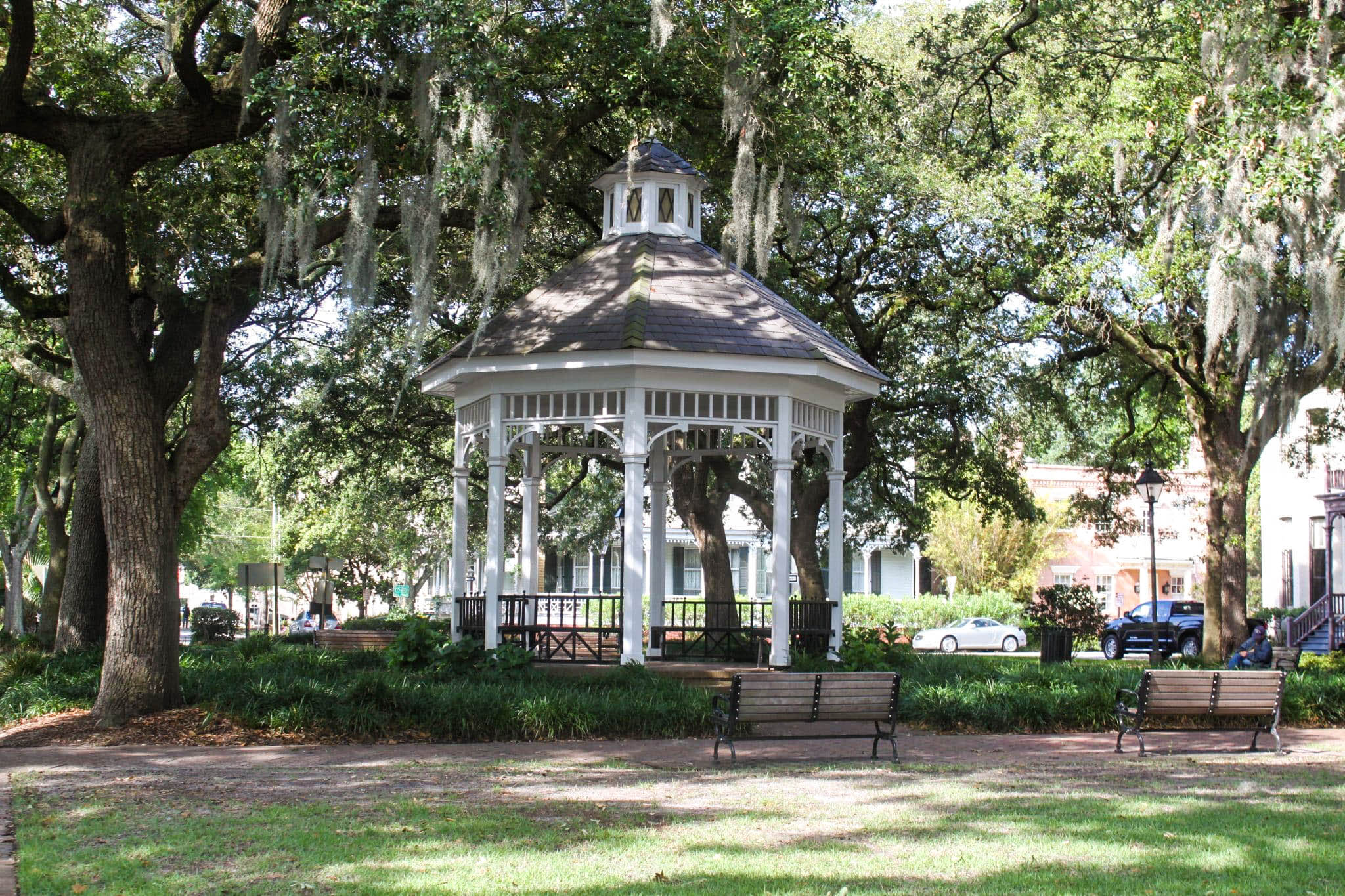

Ground-penetrating technology reveals shallow graves just 12 inches beneath a popular tourist destination, sparking a debate over historical erasure.
New York City, New York May 6, 2026 (EMWNews.com) – Lauri Lyons Creative Media produces investigative multimedia storytelling that examines culture, identity, and democracy for editorial, institutional, and public audiences.
A newly released LAMAR Institute archaeological report identifying approximately 80 shallow graves beneath Whitefield Square is reshaping public understanding of one of Savannah’s most visited historic sites, and intensifying calls for commemoration, possible excavation, and historical correction.
The findings, based on ground-penetrating radar analysis, indicate that burial anomalies lie as shallow as approximately 12 inches below the surface, with additional anomalies extending to roughly 2 to 3.5 feet deep. These subsurface features exist within a popular square widely used for public gatherings, tourism, and wedding photographs. The report adds scientific confirmation to longstanding concerns that the site is part of an unmarked 18th-century burial ground for enslaved and free Africans.
The discovery follows years of civic advocacy connected to the Rest With Honor Savannah initiative, a research and civic petition effort launched in 2020 by artist and journalist Lauri Lyons. Working remotely during the COVID-19 pandemic, Lyons conducted archival research, initiated the first petitions, and raised early questions about the presence of burial grounds beneath both Whitefield Square and the former Calhoun Square.
Local reporting helped bring the issue into public view, including early coverage by Tina Brown of the Savannah Tribune and later analysis by Dr. Maxine L. Bryant of the Savannah Morning News. Community engagement was further advanced through outreach and petition efforts led by Lisa Jackson of the Savannah African Art Museum, along with early local support from community advocate Patt Gunn, who contributed to on-the-ground awareness and public engagement.
The broader initiative contributed to a significant civic milestone in 2024, when the City of Savannah renamed Calhoun Square, long honoring a pro-slavery politician, to Taylor Square, marking the first renaming of a Savannah city square in approximately a century.
The new findings at Whitefield Square are prompting renewed scrutiny of its namesake, George Whitefield, an influential evangelical preacher, plantation owner, and founder of the Bethesda Academy in Savannah. Established in 1740 as the Bethesda Orphanage, the institution is recognized as the oldest continuously operating child-care institution in the United States.
Historical records show that Whitefield advocated for the legalization of slavery in colonial Georgia, originally established as a slave-free colony, in order to financially sustain the orphanage and its associated plantation. At his death in 1770, Whitefield did not emancipate the enslaved children and adults under his control; instead, he bequeathed them to Selina Hastings, Countess of Huntingdon.
These documented facts stand in contrast to how Whitefield is represented in public-facing historical narratives and educational materials, including those produced by the Georgia Historical Society.
The results of the archeology report also raise urgent practical and ethical questions: how did shallow burial sites remain undetected in a heavily maintained public park, what steps should be followed if human remains are confirmed, and how the site should be preserved.
Lyons has previously called for both Whitefield Square and Taylor Square to be protected through designation or partnership aligned with the National Park Service, and continues to advocate for long-term preservation and recognition of the burial ground. Lyons recommends Whitefield Square be renamed in honor of civil rights leader W. W. Law or another figure reflective of Black history and community legacy.
As the United States approaches its 250th anniversary, the findings underscore a broader national reckoning with how public spaces remember, and omit, the past, and how long-buried histories are finally being brought into public view.
Lauri Lyons Creative Media produces investigative multimedia storytelling that examines culture, identity, and democracy for editorial, institutional, and public audiences.


Source :Lauri Lyons Creative Media
This article was originally published by EMWNews. Read the original article here.
FREE Money In 2024 The Average Family Will Receive $22,967 On Gov’t Grants If They Apply.
There’s nothing complicated about it, Get Your FREE Money!
NO CREDIT Check – Bankruptcy OK – Apply Online
https://GrantsAvailable.com
[youtube https://www.youtube.com/watch?v=a0g8UEDB47Y?si=cKR-DuN-n7I_rB4d&w=560&h=315]