The US is quietly arming Taiwan to the teeth

US President Joe Biden’s recent approval of an $80 million (£64.6 million) grant to Taiwan for the acquisition of American military equipment has been met with strong opposition from China. While on the surface, this sum may seem modest, it is essential to recognize the broader context. Taiwan has already committed over $14 billion for the procurement of US military assets. Is this additional $80 million truly significant?
Notably, the $80 million allocated is not a loan; it is derived from American taxpayers’ funds. This marks a significant departure from a historical precedent of over four decades during which the United States refrained from using its own financial resources to provide weapons to a region it officially does not diplomatically acknowledge. This move is executed under the framework of foreign military finance (FMF).
Since Russia’s invasion of Ukraine in the previous year, FMF has been employed to extend approximately $4 billion in military aid to Kyiv. Additionally, substantial financial support has been extended to countries such as Afghanistan, Iraq, Israel, and Egypt, among others. However, until now, this support was limited to nations or entities recognized by the United Nations, a status that Taiwan does not possess.
Since the shift in US diplomatic recognition from Taiwan to China in 1979, Washington has continued to supply arms to the island nation under the provisions of the Taiwan Relations Act. The objective was to provide Taiwan with the necessary defensive capabilities against a potential Chinese attack while avoiding destabilizing US-China relations by limiting the scale of military assistance. For decades, this approach, known as “strategic ambiguity,” has allowed the United States to maintain its relationship with both China and Taiwan.
However, in the past decade, the military balance in the Taiwan Strait has shifted significantly in favor of China, rendering the previous approach ineffective. While Washington officially claims that its policy remains unchanged, it is evident that a subtle shift is underway. The US State Department has emphasized that FMF does not constitute formal recognition of Taiwan.
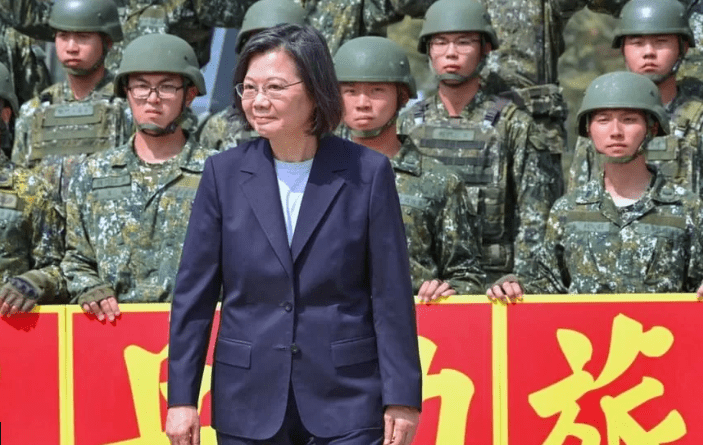
Nonetheless, from Taiwan’s perspective, it is clear that the United States is redefining its relationship with the island, particularly considering the urgency with which Washington is urging Taiwan to bolster its military capabilities. Taiwan, facing a significant military imbalance with China, is in dire need of assistance.
According to Wang Ting-yu, a legislator from the ruling party with close ties to Taiwan’s President Tsai Ing-wen and US Congressional leaders, the $80 million represents just the beginning of a potentially much larger commitment. He points to President Biden’s approval of $500 million in military services and equipment for Taiwan in July, with the potential for this figure to reach up to $10 billion over the next five years.
Traditional arms procurement agreements can span up to a decade, but FMF allows the United States to supply weapons directly from its own stockpiles, bypassing the lengthy approval process. This is significant, especially when considering the divided nature of the US Congress, which has hindered the delivery of aid to Ukraine but appears to offer more bipartisan support for Taiwan.
However, Taiwan’s ability to procure US military equipment may face challenges due to the ongoing conflicts in Gaza and Ukraine. President Biden seeks war aid for Ukraine and Israel, which would indirectly benefit Taiwan. While the Ministry of National Defense in Taipei remains tight-lipped about the specific allocation of US funds, experts suggest that it may be directed towards crucial assets like Javelin and Stinger anti-aircraft missiles, which are urgently required to bolster Taiwan’s defenses.
Long-term observers assert that Taiwan is ill-prepared for a potential Chinese attack. Numerous deficiencies exist, including an aging tank fleet, a lack of modern missile systems, outdated command structures and tactics, inadequate troop levels, insufficient counter-intelligence operations in China, and a flawed military conscription system.
In an effort to address these challenges, the United States is also undertaking the retraining of Taiwan’s armed forces. For decades, Taiwan prioritized its navy and air force under the assumption that China would find an invasion too difficult and risky. However, with China’s military expansion and formidable capabilities, a paradigm shift is underway, prompting Taiwan to adopt a “fortress Taiwan” strategy that emphasizes ground troops, infantry, and artillery as a means of deterring potential invasion and engaging the PLA in urban and jungle warfare.
Nonetheless, Taiwan’s army remains encumbered by outdated doctrines and limited interaction with contemporary military practices due to decades of diplomatic isolation. The changing geopolitical landscape, characterized by Xi Jinping’s assertive nationalism and the events in Ukraine, has necessitated a reevaluation of Taiwan’s defense strategy and the role of the United States in supporting it.
Recent lessons from Ukraine’s conflict highlight the importance of modern artillery capabilities, agility, and mobility on the battlefield. Taiwan’s outdated artillery equipment is a significant vulnerability. This realization has prompted the dispatch of Taiwanese ground troops to the United States for training, as well as the integration of US trainers with Taiwan’s marines and special forces.
William Chung, a research fellow at the Institute for National Defense and Security Research in Taipei, emphasizes that Taiwan alone cannot hope to deter China. International engagement and support from entities like the G7 or NATO are crucial to safeguard Taiwan’s interests and discourage Chinese aggression. China’s assertive behavior in the South China Sea and the East China Sea has led to a reevaluation of regional alliances and security concerns, reinforcing Taiwan’s interconnectedness with broader regional dynamics.
In Washington, there is a vigorous debate on the extent of US support for Taiwan. While some argue for continued “strategic ambiguity,” others believe that a more explicit commitment from the United States is essential to bolster Taiwan’s defenses without provoking Beijing. The delicate balance between these considerations underscores the complexity of the issue at hand.