What Is the Difference Between Compression Molding and Isostatic Pressing?

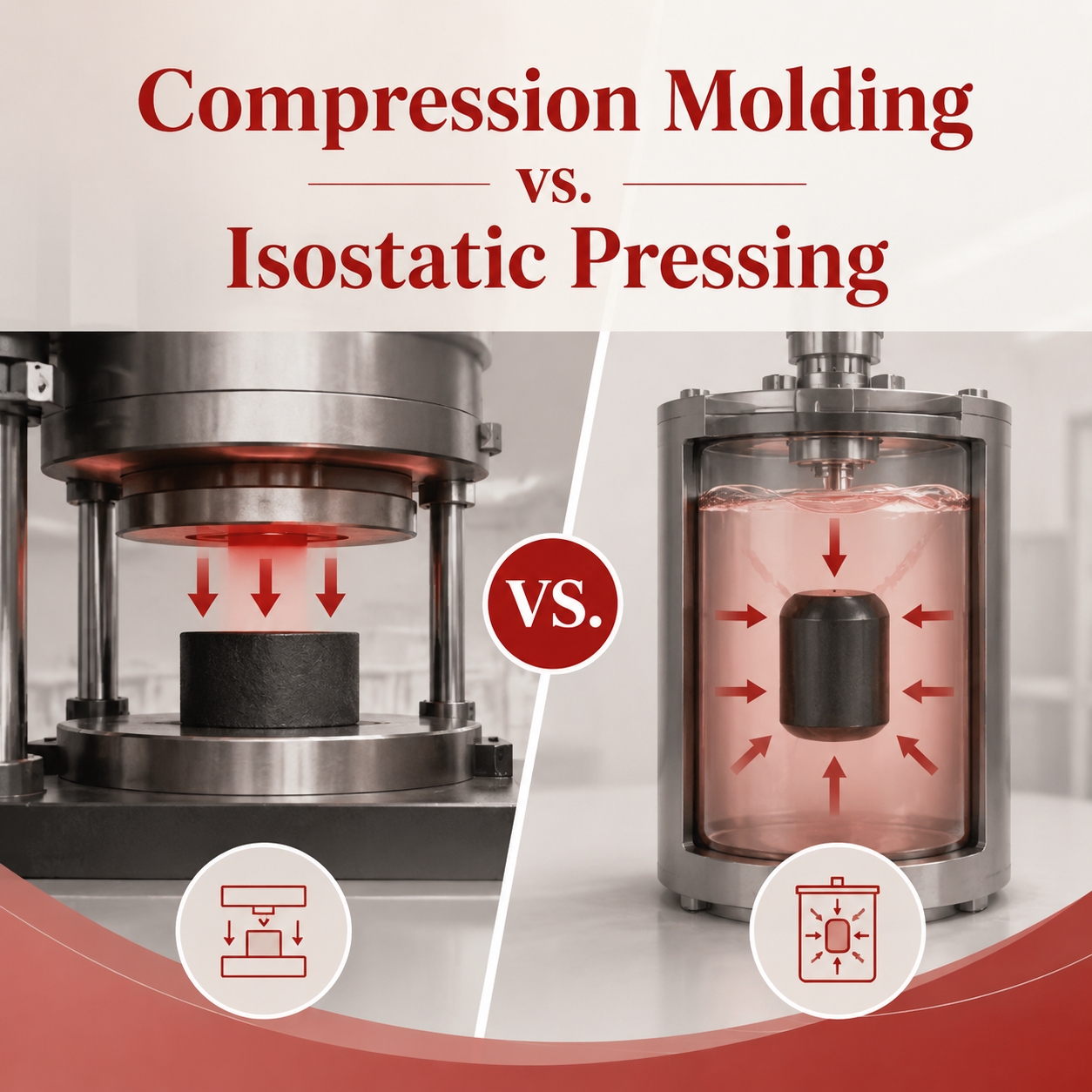

Wenzhou, Zhejiang May 21, 2026 (EMWNews.com) – Compression molding and isostatic pressing both create precise shapes out of raw materials, but the two processes are completely different in how they apply pressure, how flexible they are as forming methods, and the price of their associated machining equipment. Compression molding uses only one direction of compression to shape the material in the mold and is best used when producing simple, mass-produced components. Alternatively, isostatic pressing applies a constant, uniform amount of pressure from multiple directions to allow for the production of complex, near-net-shaped parts and significantly reduces the amount of waste material produced during the manufacturing process. This guide will thoroughly explain compression molding and isostatic pressing including their operation, applications, and advantages and disadvantages to sufficiently assist manufacturers and engineers with the selection of their respective production methods.
Compression Molding Is Best Suited For Mass Production Of Simple Parts
Compression molding is an age-old method of manufacturing that is accomplished by placing the desired raw material (most frequently thermoset plastic, rubber, or composite) into one half of a heated mold, followed by applying unidirectional pressure (from top to bottom) to form it into its intended original configuration inside the cavity. The material will then undergo a curing/solidifying process from being subjected to heat and pressure, which will eventually cause the molded part to be separated from the mold cavity after it has cooled.
Some key characteristics of this type of molding process are:
- Unidirectional Pressure: This method utilizes a single direction of pressure application, thereby limiting the complexity of the participating parts.
- High Volume Efficiency: This forming method will allow manufacturers to produce thousands of identical parts at once (example: automotive parts, rubber gaskets, etc.).
- Low Tooling Costs: The manufacturing process of molds used for compression molding is relatively simple and inexpensive to set up, compared to those of isostatic presses.
Cost Range: Compression molding machines generally cost between $10,000-$50,000 for smaller models and may reach into the $100,000+ range for larger-scale industrial models. Ideal for: Rubber products, thermoset plastics, and simple geometric composite parts.
Isostatic Pressing: Applying Equal Pressure to Create Complex High Precision Parts
Used in the creation of high-performance materials, isostatic pressing applies uniform pressure from all directions with the help of either a liquid or gas as well as a flexible mold (usually rubber or plastic) submerged in a hydraulic fluid or an inert gas within a pressure vessel, quickly compressing a material into the shape of the mold by applying an equal amount of force to all surfaces of the material.
There are two main types of isostatic presses:
Cold Isostatic Pressing
Cold isostatic pressing shapes powders such as ceramics, metals, and composites into green parts which are then used for the manufacture of final sintered products. Some common applications include:
- Manufacture of Isostatic Pressed Ceramics: The manufacture of high-strength isostatic pressed ceramic components such as insulators, cutting tools, and medical implants.
- Metal Powder Forming: The creation of near-net shape (NNS) metal components for use in the aerospace and automotive industries.
CIP Price Range: Between $50,000-$200,000. Companies like Quintus Technologies and American Isostatic Presses manufacture commercial-grade presses for use within industry.
Hot Isostatic Pressing
Hot isostatic pressing produces components at elevated temperatures (up to 2,000°C) and pressures (up to 200 MPa) to achieve maximum density in metallic parts, eliminate porosity, and improve the mechanical properties of the finished product. Hot isostatic pressing products and their applications include:
Aerospace Parts: Increasing the density of turbine rotors and other structural components produced from titanium or superalloys.
Medical Implants: Producing more porous metallic implants for enhanced integration to the bones surrounding the implants.
HIP Price Range: Between $500,000-$5,000,000+ for commercial-grade hot isostatic presses. Quintus is a significant manufacturer of high-integrity pressure systems, and this is based on their state-of-the-art technology and dependability.
How Is Compression Molding Different From Other Methods? The Main Discrepancies of Isostatic Pressing
This table shows how these two processes differ based on important characteristics:
CharacteristicsCompression MoldingIsostatic PressingForm of Pressure AppliedOne-way only (top to bottom)All ways (equal both right, left, front, and back)Complexity of PartsSimple designs onlyMore complex but close to finished size (100% no need for extra machining)Amount of Material WasteA lot (after molding has been completed, the excess material is cut off)Little (a near-finished size product has little leftover material)PriceLow tooling and machinery costHigher tool and machine cost (more adaptable tooling)Number of Pieces MadePerfect for high productions (10,000 pieces+)Would do better with fewer productions (high-end use)Types of Material that can be UsedThermosetting plastics, rubber, composite materialsMetal Powder, ceramics, composite, sinteredSelecting a Method for Compression Molding or Isostatic Pressing
The selection of method will depend on the shape you want to make, the amount of material, the number of pieces you want, and your budget:
The Shape of the Part: Choose isostatic pressing if you intend to produce a complex part that closely resembles the finished product; choose the compression molding process if you are making a simple flat part.
The Type of Material: Compression molding is best suited for rubber and thermosetting materials; Isostatic pressing is most effective with metal and ceramic powders.
Production Volume: Compression molding is economical with large volume production (10,000+ units), while isostatic pressing is feasible with small volume, high-dollar-value parts.
Budget: The cost of equipment used in compression molding has a lower initial outlay than using isostatic pressing.
FAQ’s Concerning Compression Molding & Isostatic PressingWhat is the Primary Difference Between Compression Molding and Isostatic Pressing?
The primary distinction between isostatic pressing versus compression molding is as follows: compression molding only uses unidirectional force to shape materials in a rigid mold. Therefore, it is primarily used for the high-volume production of simple-shaped items. Isostatic pressing uses a fluid medium with uniform pressure from all directions to shape materials into very complex formed items, near-net shape (minimal material waste). Isostatic pressing can be used with a wider range of materials than compression molding (metals and ceramics), while compression molding is limited to thermosets, rubber, and composite materials.
When to Use Isostatic Pressing vs. Compression Molding
Utilize isostatic pressing when producing complicated, highly precision-formed items that require little post-processing or when dealing with metal or ceramic powders. Also, if producing low-quantity, high-value parts (e.g., aerospace parts or medical implants) where material waste and part quality are critical, isostatic pressing is recommended. Compression molding is better suited for high-volume production of simple flat products such as rubber gaskets and automotive trim.
What is the Price of an Isostatic Machine?
The price of an isostatic press varies according to the type of machine and the capability of the machine. Small cold isostatic presses start from $50,000-$200,000; however, large commercial/industrial hot isostatic presses can be anywhere between $500,000-$5,000,000. In addition, used isostatic presses typically sell for 30%-50% less than new; however, the buyer must consider additional costs associated with maintenance and tooling. Major manufacturers such as Quintus Technologies and Loomis Isostatic Presses also offer financing options for new equipment.
Is Isostatic Pressing Used for Ceramics?
Yes, isostatic pressing ceramics is a common application of cold isostatic pressing. The uniform pressure used in this process creates high-density, consistent ceramic products with high mechanical strength and dimensional accuracy. Examples of products produced by isostatic pressing include ceramics for insulators, cutting tools, dental implants, and aeronautics applications where extra high mechanical characteristics are needed. Isostatic pressing also produces less waste compared to traditional methods of ceramic forming, such as slip casting or extrusion.
In conclusion, compression molding and isostatic pressing are two different manufacturing processes and are actually complementary: compression molding allows for the production of high-volume, low-cost, simple components; whereas, isostatic pressing allows for near-net shape, complex components with minimal waste for critical high-value areas such as aerospace, medical, and ceramics. Compression molding forms items using unidirectional pressure, while isostatic pressing forms items using omnidirectional pressure via fluid media, thus allowing for the use of a wider range of materials, including ceramic and metallic powders. Manufacturers must consider all factors when choosing between these two processes, such as the complexity of the part, production volume, material type, and cost. For high-volume production of plastic or rubber components, compression molding is considered the most economical, while isostatic pressing produces low-volume, high-quality components with maximum utilization of the raw material.


Source :Upper Shell
This article was originally published by EMWNews. Read the original article here.
FREE Money In 2024 The Average Family Will Receive $22,967 On Gov’t Grants If They Apply.
There’s nothing complicated about it, Get Your FREE Money!
NO CREDIT Check – Bankruptcy OK – Apply Online
https://GrantsAvailable.com
[youtube https://www.youtube.com/watch?v=a0g8UEDB47Y?si=cKR-DuN-n7I_rB4d&w=560&h=315]