Food-Safety Compliance Emerges as the Deciding Factor for 24/7 Beverage Robots as Unmanned Retail Scales in 2026

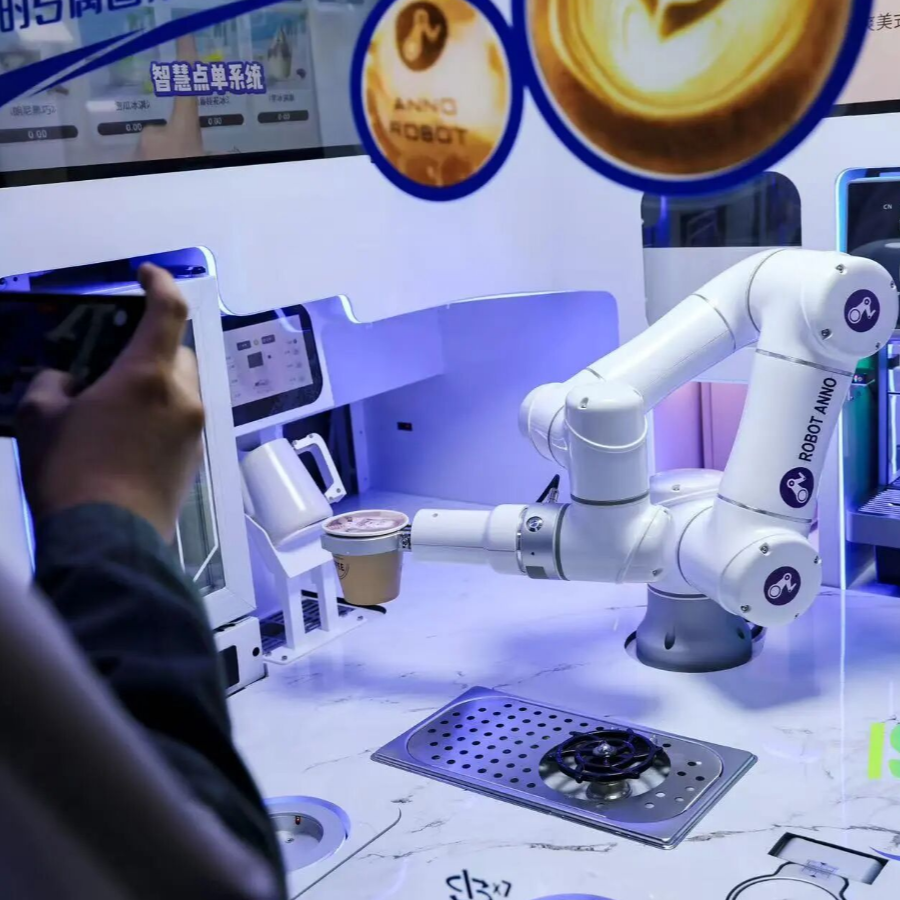

Shenzhen, Guangdong May 20, 2026 (EMWNews.com) – As autonomous coffee, ice cream and cocktail kiosks spread across airports, malls and campuses, certifications such as CE, FCC and ISO 9001 — alongside hygienic, cleaning-in-place design — are becoming the gatekeepers of market access.
As unmanned retail accelerates worldwide, the industry’s competitive battleground is shifting from price and novelty toward a less visible but more decisive criterion: food-safety compliance. Operators deploying autonomous beverage kiosks in regulated, high-traffic environments are discovering that certifications and hygienic design now determine which machines are permitted to operate at all.
The shift reflects how quickly automated food service has matured. Industry analysts value the robot coffee kiosk segment at roughly USD 20 billion in 2024, with projections approaching USD 51 billion by 2032 at a compound annual growth rate above 12 percent. Growth on that scale invites regulatory scrutiny. Equipment that prepares and dispenses food for the public increasingly must demonstrate the same sanitation and material-safety standards long required of commercial kitchens and traditional vending machines.
Certification moves from marketing badge to operating requirement
Standards bodies have already extended their frameworks to automated equipment. NSF/ANSI 25 sets minimum food-protection and sanitation requirements for the materials, design, construction and performance of food and beverage vending machines, while NSF/ANSI 2 addresses food handling and processing equipment more broadly. NSF, which has facilitated the development of more than 75 food-equipment standards, has publicly noted rising demand for effective cleaning-in-place designs and has stated that its standards are written to address hygienic design principles for equipment both old and new — including robotic systems.
For procurement teams at airports, hospitals, shopping centers and corporate campuses, the implications are practical. A robotic kiosk without recognized safety and electromagnetic-compliance documentation can stall during site approval, insurance review or landlord vetting, regardless of its commercial appeal. Increasingly, buyers treat certification as a prerequisite for the shortlist rather than a differentiator at the negotiating table.
Hygienic design becomes an engineering discipline
The compliance question extends beyond paperwork into how a machine is built. Enclosed, food-grade workspaces reduce contamination risk and limit exposure to dust and contact in public settings. Cleaning-in-place architecture shortens maintenance cycles and supports consistent hygiene across thousands of servings — a meaningful factor for equipment expected to operate around the clock with minimal on-site staff.
These design choices map directly onto the certification criteria evaluators apply: ease of cleaning and inspection, use of food-grade materials, and reliable performance over time. For manufacturers, that means food safety can no longer be addressed after a product is engineered; it must be designed in from the outset.
A manufacturer’s compliance-led approach
Shenzhen-based RobotAnno, a national high-tech enterprise established in 2017, illustrates how manufacturers are positioning around this standard. The company reports more than 70 patented technologies and products certified to ISO 9001, EU CE and US FCC requirements, with deployments across more than 60 countries spanning education, retail and light-industry settings.
Its product range reflects a platform approach to compliant automation. Alongside its AI coffee robot systems, RobotAnno produces an ice cream robot line and a robot bartender and drinks platform, each built around enclosed, food-safe workspaces and remote management. The company frames its broader offering as a suite of unmanned retail solutions designed for 24/7 operation under IoT supervision.
“Certification is no longer the finish line — it is the entry ticket,” said Leon Leung of RobotAnno. “Operators want assurance that an autonomous kiosk meets the same hygiene and safety expectations as a staffed counter. Building to recognized standards from the design stage is what makes global deployment possible.”
Outlook
As autonomous beverage retail expands into more regulated environments, analysts expect food-safety compliance and hygienic design to consolidate the market around manufacturers that can document them. The next phase of growth, in this view, will favor builders who treat safety standards as a core engineering specification rather than a closing argument — a development that may ultimately benefit operators and consumers alike through more consistent, verifiably safe automated service.
About RobotAnno
RobotAnno is a Shenzhen-based national high-tech enterprise founded in 2017, specializing in AI-driven commercial unmanned retail robots, including coffee, ice cream, bubble tea and cocktail systems. With more than 70 patents and ISO 9001, EU CE and US FCC certifications, the company serves clients in over 60 countries. More information is available at https://www.annorobots.com.
Source :Robot Anno (Shenzhen) Co., Ltd.
This article was originally published by EMWNews. Read the original article here.
FREE Money In 2024 The Average Family Will Receive $22,967 On Gov’t Grants If They Apply.
There’s nothing complicated about it, Get Your FREE Money!
NO CREDIT Check – Bankruptcy OK – Apply Online
https://GrantsAvailable.com
[youtube https://www.youtube.com/watch?v=a0g8UEDB47Y?si=cKR-DuN-n7I_rB4d&w=560&h=315]